2026-04-02 Betaine, as a feed additive, mainly comes in five types: anhydrous betaine, monohydrate betaine, betaine hydrochloride, compound betaine, and microencapsulated/coated betaine. Its structure is stable, although different types exhibit slight differences in appearance. It is readily soluble in water, soluble in methanol/ethanol, and sparingly soluble in ether and chloroform. It is natural, non-toxic, residue-free, and non-teratogenic/carcinogenic, enabling green farming. Due to its advantages such as methyl donor, osmotic pressure regulation, growth promotion, stress resistance, carcass improvement, appetite enhancement, vitamin stabilization in feed, and auxiliary anti-coccidiosis, it is widely used in pig, poultry, aquaculture, and ruminant farming. - Polifar
Read More
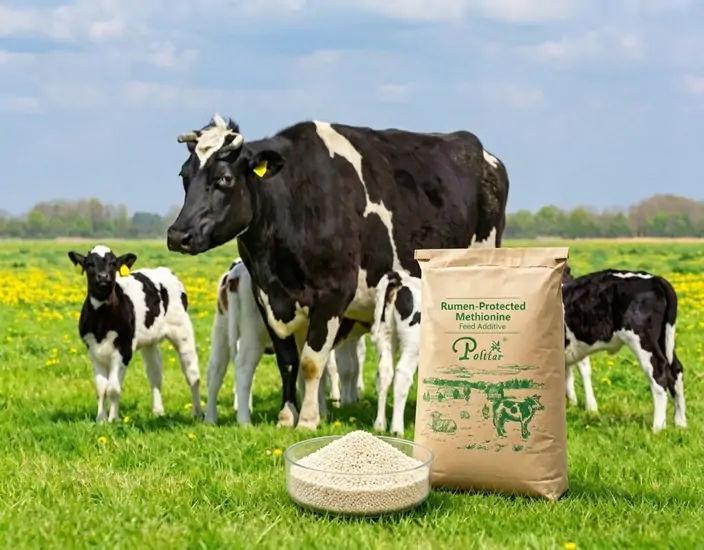
2026-03-26 Methionine is one of the most essential amino acids in feed additives. When Polifar Group received numerous inquiries from farmers, they found that DL-methionine and rumen-protected methionine were the most frequently asked questions. However, there are many types of methionine suitable for different animals, totaling five types: DL-methionine, L-methionine, rumen-protected methionine, hydroxymethionine analogues (MHA), and calcium hydroxymethionine (MHA-Ca). Each of these five types of methionine is tailored to different animals, farming scenarios, and cost requirements. Choosing the most suitable product can double farming efficiency, while choosing the wrong one can lead to wasted costs and reduced profitability. - Polifar
Read More
2026-03-25 Methionine, as the first limiting amino acid in feed additives, is of great importance to farmers. Currently, the global economic stagnation and rising prices of some raw materials have led to a shortage of methionine, causing its price to rise. This is especially true for large-scale, standardized farms, where the demand for methionine is even higher. To avoid waste and efficiently utilize feed-grade methionine, it is essential to choose higher-quality methionine suppliers. This article will focus on the scientific use of methionine in feed, its differentiated value, market functions, and future development trends, ensuring everyone understands the scientific application and market value of methionine in feed. - Polifar
Read More
2026-03-20 Beta-carotene is a natural orange-yellow pigment that serves as both a coloring agent and a nutritional fortifier in food. This article, based on China GB 2760-2024, systematically introduces its basic properties, regulations, standards, physiological functions, and industrial applications. Beta-carotene is a fat-soluble powder, primarily prepared through synthesis, fermentation, and natural extraction. It is a precursor to vitamin A and possesses antioxidant and immune-enhancing properties. This substance can be used for coloring and nutritional fortification in various foods, including beverages, baked goods, and dairy products. With continuous innovation in related formulation technologies, beta-carotene is evolving from a traditional coloring agent to a nutritional and health-oriented product, showing broad application prospects. - Polifar
Read More