
2026-07-24 This basic guide covers essential knowledge of food-grade phosphates. It analyzes their core roles in the food industry, sorts out global regulations, categorizes phosphates by chemical structure, and explains key indicators for procurement and formulation, helping food R&D, procurement and production staff make proper selections. - Polifar
Read More 
2026-07-15 Feed-grade Manganese Sulfate Monohydrate is an essential trace element supplement for poultry, swine, ruminants, aquatic animals and pets. It features excellent water solubility and high absorption & utilization rates, complying with multiple feed-grade standards. It participates in bone development, reproductive function maintenance and the synthesis of enzymatic systems. This article compares various manganese sources, elaborates on methods to identify the quality of manganese sulfate, and analyzes the global demand outlook for manganese in the future. - Polifar
Read More 
2026-07-07 From Polifar’s supplier perspective, this article compares two acidulants: tartaric acid and citric acid. They differ greatly in flavor, raw material sources, applications, costs and processing properties. Tartaric acid is widely used in winemaking, high-end baking and specialty candies, while citric acid fits beverages, general baking and broad-spectrum preservation. Both are safe when added in compliance with regulations. Industry FAQs are attached at the end, and Polifar offers one-stop sourcing of food additives. - Polifar
Read More 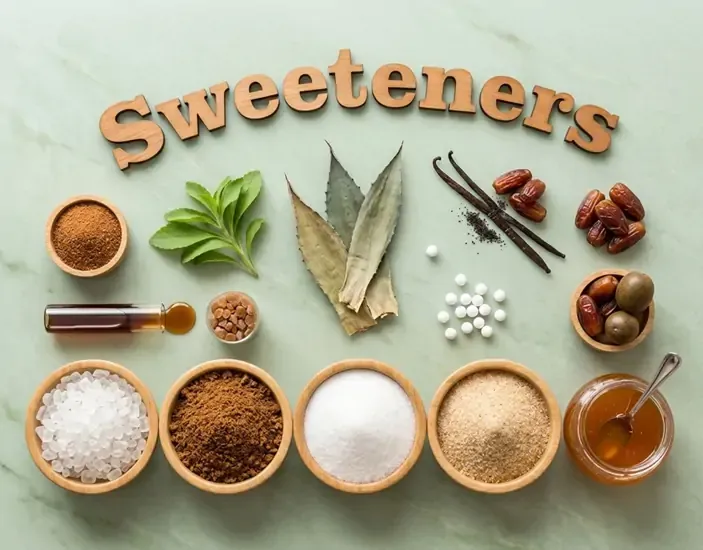
2026-06-23 This article categorizes mainstream food sweeteners into four main types, comparing the raw materials, sweetness, characteristics, applications, and advantages and disadvantages of sucrose, erythritol, steviol glycosides, mogrosides, sucralose, and aspartame in a table. It provides selection advice for people controlling their sugar intake, losing weight, and those with diabetes, as well as baking and beverage manufacturers. The article also explains the safe use standards for sweeteners, predicts the development trend of natural, zero-calorie, and low-GI sweeteners, and recommends compliant sweetener supplier Polifar. - Polifar
Read More 
 English