
 English


Views: 0 Author: Site Editor Publish Time: 2026-11-11 Origin: Site


Sodium bicarbonate, commonly known as baking soda, is a basic functional raw material with important applications in food processing, animal nutrition, pharmaceuticals, personal care and environmental protection. This article examines sodium bicarbonate systematically: its chemical identity, its properties, its ten major uses, its applications in food and feed, and purchasing considerations including pricing and wholesale supply, together with answers to frequently asked questions. It also explains how Polifar's one-stop sourcing service, as a food additive supplier, feed additive supplier and sodium bicarbonate supplier, can support buyers.
Sodium bicarbonate, also known as baking soda, has the chemical formula NaHCO₃, a molecular weight of approximately 84.01, CAS number 144-55-8 and food additive codes INS 500(ii) / E500(ii). It is an odorless white crystalline powder or granule whose aqueous solution is mildly alkaline. The baking soda used in everyday life is sodium bicarbonate; “sodium hydrogen carbonate” and “acid sodium carbonate” are alternative names used in industry and trade for the same substance.
Sodium bicarbonate must not be confused with sodium carbonate (soda ash) or sodium thiosulfate (hypo). Sodium carbonate is more strongly alkaline and more irritating and is used mainly in detergents, glassmaking and as an industrial alkali source, whereas sodium bicarbonate is mildly alkaline and is the grade commonly used in food and feed. The three products must never be substituted for one another simply because their names sound alike.
Industrially, sodium bicarbonate is produced mainly by absorbing carbon dioxide into a sodium carbonate solution, followed by crystallization, filtration, washing, drying and sieving to obtain the various grades. Crystallization control, drying and sieving directly affect purity, moisture content and particle size, and this is the source of the differences between food-grade and feed-grade products and between individual batches.
The wide use of sodium bicarbonate rests on three core functions: gas generation (leavening), neutralization (buffering) and sodium supply (nutrition). All of them derive from the following properties:
In water, sodium bicarbonate dissociates into Na⁺ and HCO₃⁻. The bicarbonate ion reacts with hydrogen ions to form CO₂ and water, so the compound can both adjust pH and provide buffering in acidic systems.
Solubility is approximately 9.6 g per 100 g of water at 20 °C, which suits aqueous formulations, beverages and premix processing. When preparing concentrated solutions, temperature and the risk of crystallization must be taken into account.
When heated, sodium bicarbonate releases carbon dioxide and forms sodium carbonate. The carbon dioxide helps food to rise, but if the formula contains too little acid, a considerable amount of alkaline material may remain, producing a soapy taste and excessive darkening. Baking formulas should therefore be designed so that the ratio of sodium bicarbonate to acidic components matches the acidity of the ingredients.
Sodium bicarbonate reacts with acidic components such as citric acid, tartaric acid and sodium acid pyrophosphate to release CO₂, and this reaction is the basis of compound leavening agents and effervescent systems.
Sodium is involved in the regulation of body fluid osmotic pressure, nerve conduction and nutrient transport, and sodium bicarbonate can serve as one of the sodium sources in feed.
Sodium bicarbonate is reasonably stable in dry air, but it may change slowly in humid conditions and may cake once it has absorbed moisture.
Take citric acid as an example. In a compound leavening agent, formulators control the rate of gas release by selecting different acidic components, such as fast-reacting citric acid and slow-reacting sodium acid pyrophosphate, so that the dough expands to the right degree during mixing, resting and baking.
Sodium bicarbonate is a well-established inorganic salt. Provided that the applicable quality standards, permitted uses and good manufacturing practice are respected, it can be used in food processing, animal feed and certain pharmaceutical preparations. The grade selected must meet the regulations governing the intended use, and every application must comply with the regulations and product standards of the target market.
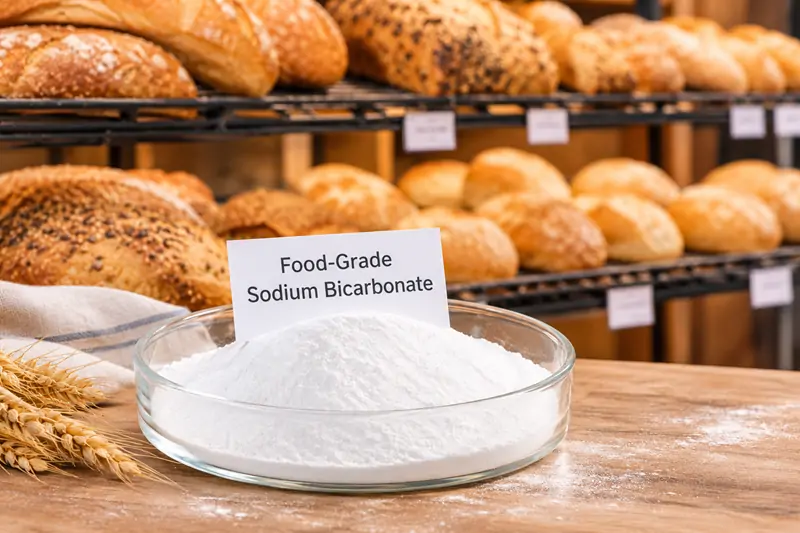
Sodium bicarbonate acts as the alkaline component of chemical leavening agents in cakes, biscuits, muffins and quick breads, releasing CO₂ to improve volume and crumb structure.
It adjusts the pH of food systems, neutralizes excess acid and stabilizes flavor, color and processing performance.
In combination with citric acid and tartaric acid, it is used in effervescent drinks, solid beverages and sparkling confectionery.
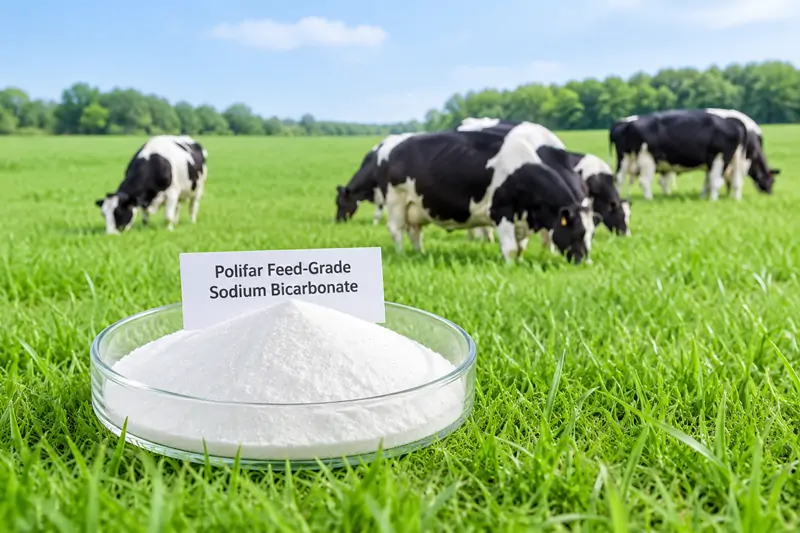
In high-concentrate or high-starch diets, sodium bicarbonate helps to neutralize excess acid in the rumen, maintains a suitable rumen pH and serves as a supporting nutritional measure for reducing the risk of subacute ruminal acidosis (SARA).
It supplies sodium and bicarbonate to broilers, laying hens, pigs and other animals and is used in electrolyte balance programs during periods of heat stress.
Sodium bicarbonate can be used in antacids, effervescent preparations and some oral dosage forms. It may act as the active ingredient in antacids and, in other drug formulations, may serve to adjust pH or take part in an effervescent reaction. Pharmaceutical manufacturing must use raw materials that meet the relevant pharmacopoeial and drug quality requirements.
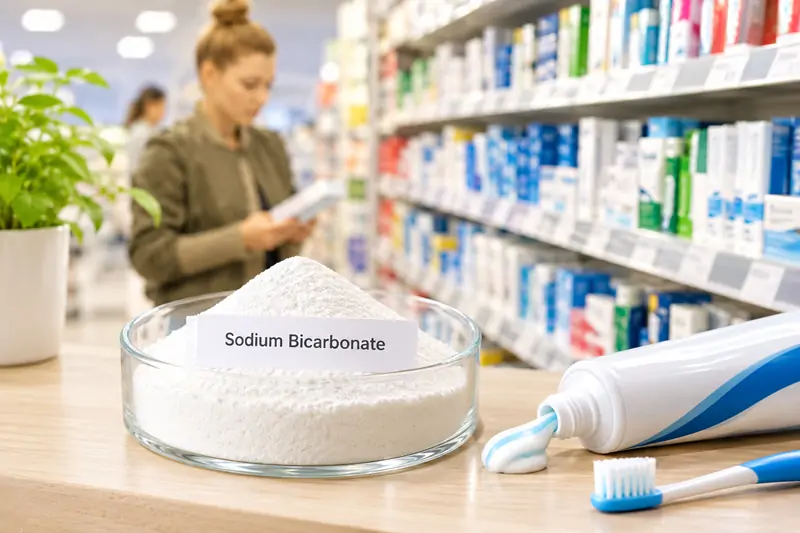
A mild cleaning and deodorizing ingredient in toothpastes, cleaning powders, deodorant products and bath salts.
Bicarbonate blasting removes dirt and coatings from equipment surfaces. Its alkalinity is mild, but material compatibility testing is still required.
In dry and semi-dry flue gas cleaning, sodium bicarbonate reacts with acidic gases such as SO₂ and HCl to reduce pollutant emissions.
As a source of alkalinity, it adjusts total alkalinity and stabilizes pH in water; the dosage must be calculated on the basis of water testing.
These ten uses span food, feed, pharmaceuticals, personal care, industry and environmental protection. Food and feed place the highest demands on quality and compliance and are the two areas in which buyers most need to distinguish product grades strictly.
Food-grade sodium bicarbonate is one of the most widely used alkaline raw materials among food additives; the food additive baking soda used in everyday baking is normally food-grade sodium bicarbonate. The following sections outline its functions and the benefits it delivers by application.
Baked goods: cakes, biscuits, cookies, muffins and waffles are the most representative application of food-grade sodium bicarbonate.
Compound leavening agents and premixes: combined with sodium acid pyrophosphate, monocalcium phosphate, citric acid and starch, they deliver more consistent leavening by controlling the rate of gas release.
Beverages and effervescent foods: solid beverages, effervescent tablets and sparkling confectionery, which place high demands on raw material moisture, particle size and moisture-barrier packaging.
Flour-based products: steamed buns, fried dough sticks and noodles, where it adjusts dough pH and improves texture.
Meat products and some processed aquatic products: sodium bicarbonate can be used for pH adjustment in specific formulas and may affect the water-holding capacity and processing behavior of proteins.
Improved leavening, giving softer products with more uniform gas cells.
Helps biscuits achieve a crisp texture and improves appearance and color.
Stabilizes the pH of the system, making processing more controllable.
Relatively low in cost, flexible in use and easy to combine with other ingredients.
Do not look at the inclusion rate alone: the reactive acid available in the formula must also be calculated, otherwise a soapy aftertaste and excessive darkening may remain.
Control the rate of gas release: carbon dioxide released too early reduces leavening performance.
Pay attention to the pH of the finished product.
Comply with the regulations of the target market. In the United States, for example, the FDA requires sodium bicarbonate to be used in accordance with good manufacturing practice, while permitted uses and limits differ between countries and regions.
Feed-grade sodium bicarbonate is a well-established dairy feed additive and also a sodium source and electrolyte regulator in livestock and poultry feed. The following sections outline its functions and key points of use by animal category.
High-yielding dairy cows and fattening cattle and sheep receive diets with a high concentrate proportion. If effective fiber is insufficient or feeding management is poor, the acid load in the rumen rises and subacute ruminal acidosis becomes likely. As a rumen buffer, feed-grade sodium bicarbonate neutralizes excess hydrogen ions. Its main benefits are:
Helps stabilize rumen pH and creates the conditions for normal microbial fermentation.
Supports fiber digestion and helps maintain feed intake.
Helps stabilize milk fat percentage and milk yield and reduces the risk of digestive and metabolic disorders.
Supplies a certain amount of sodium and contributes to fluid balance.
In some high-yielding dairy herds or diets with a high concentrate proportion, sodium bicarbonate can be used as a rumen buffer. Industry sources commonly cite a reference range of 0.5%–1.0% of dietary dry matter, but the actual dose must be determined in the light of daily dry matter intake, diet composition, sodium requirements and stage of production. At a dry matter intake of 20 kg/day, this percentage corresponds to approximately 100–200 g per head per day; this is a calculation example only and must not be applied as a fixed standard to all cows. Specific inclusion levels should be calculated by an animal nutritionist or agreed with a feed formulator.
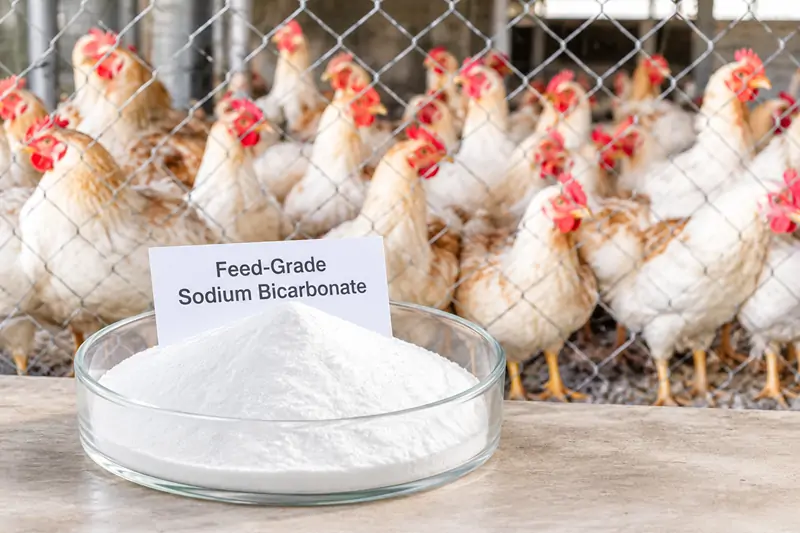
In some poultry and pig diets, sodium bicarbonate can serve as a sodium source and take part in managing the balance of sodium, potassium and chloride. At high ambient temperatures, poultry may experience acid-base changes caused by faster respiration, and sodium bicarbonate can form part of a nutritional heat stress program. In some formulas it can replace part of the sodium supplied by sodium chloride, but chloride supply must be recalculated at the same time so that overall electrolyte balance is not disturbed. Excessive inclusion may raise sodium intake, water consumption and fecal moisture, so it must be adjusted on the basis of diet analysis.
In aquaculture, sodium bicarbonate can be used to adjust water alkalinity and stabilize pH; in some specialty feed formulas it is also used to modify the intestinal environment and the pH of the formula. Such uses must be applied with care, taking account of the species, water quality data and local regulations.
In practice, sodium bicarbonate usually forms part of a complete diet together with sodium chloride (sodium and chloride), potassium chloride (potassium), magnesium oxide (magnesium), calcium carbonate and dicalcium phosphate (calcium and phosphorus), amino acids and vitamins, and trace mineral premixes. These ingredients are not interchangeable at will and should be calculated together on the basis of animal species, stage of production and ingredient assay data.
Both are based on NaHCO₃, but they differ in quality control priorities, applicable standards and compliance documentation, so purity or price alone does not show that one grade can be substituted for the other.
Comparison Item | Food Grade | Feed Grade |
Main Applications | Baking, beverages and food processing | Animal feed and animal nutrition |
Core Functions | Leavening, acidity regulation, processing aid | Rumen buffering, sodium source, electrolyte management |
Quality Focus | Purity, heavy metals, impurities, moisture, particle size | Sodium bicarbonate and sodium content, impurities, moisture, caking |
Compliance Basis | Food additive regulations and standards | Feed and feed additive regulations and standards |
Typical Customers | Food factories and food ingredient distributors | Feed mills, premix companies and farming enterprises |
In short: food-grade material must not automatically be assumed suitable for feed, and feed-grade material must not be used in food. The appropriate grade should be selected according to the end use and the target market, and the corresponding documentation should be requested.
Whether buying directly from a sodium bicarbonate manufacturer or through a specialist sodium bicarbonate or baking soda supplier, it is advisable to assess the following points.
Grade and use match: establish whether the grade is food, feed or pharmaceutical; the grades must not be interchanged.
Purity and active content: confirm the NaHCO₃ content (a common requirement is ≥99%) and the applicable standard, and check the batch COA rather than relying on marketing claims.
Moisture and hygroscopicity: moisture affects storage stability and flowability, and premixes and effervescent products are especially sensitive, so moisture-barrier packaging and transport conditions matter.
Particle size distribution: baking premixes, effervescent preparations, feed mixing and industrial blasting each have different requirements, and finer is not always better, because excessive fines increase dust and impair flow.
Heavy metals and impurities: monitor lead, arsenic, mercury, cadmium, chloride and sulfate, and confirm the limits against the standards of the target market.
Functional specifications: whether anti-caking treatment is applied, whether the product is suitable for premixing or tableting, and whether coated or slow-release versions for ruminants are available.
Qualifications and documents: product specifications, COA and SDS, together with certifications such as ISO, FSSC 22000, GMP+, HACCP, Halal and Kosher, and confirmation of the registration requirements of the destination country.
Packaging and logistics: 25 kg bags and bulk bags need moisture protection and must suit warehousing and automatic dosing equipment; production capacity, lead times, LCL flexibility and export experience should be assessed at the same time.
Total cost and one-stop capability: weigh the cost of active content, transport and storage, losses caused by quality variation and delivery risk; whether other additives can be supplied at the same time also determines supplier management costs.
Practical advice: for a first purchase, define the application, grade, annual volume, packaging and destination country, request the specification and COA, and take a sample for a small-scale trial (for example a baking test, an effervescence test or a feed mixing uniformity test) before placing a bulk order. For long-term supply, agree on batch retention samples and a re-testing mechanism for key parameters.
On sodium bicarbonate pricing: prices are affected by raw material costs such as soda ash, energy prices, production technology, product grade (food, feed and industrial grades are priced differently), packaging, order volume and international freight, and they move with the market, so a single quotation should not be the only basis for comparison. For wholesale and bulk purchasing, define the grade and specification by application first, then compare the cost of active content together with transport and storage costs, and consider long-term framework agreements or staged deliveries to stabilize both price and supply.

Sodium bicarbonate is a basic raw material, but food factories and feed mills look for different things: the former focus on food-grade quality, regulatory compliance and particle size, the latter on buffering performance, sodium content and batch consistency. As a food additive supplier and feed additive supplier serving customers worldwide, Polifar covers food additives, feed additives, veterinary drugs and premixes and can act as your sodium bicarbonate or baking soda supplier, offering the following procurement support:
Specification recommendations by application: food-grade or feed-grade sodium bicarbonate matched to the end use, target market and quality requirements.
One-stop procurement: sodium bicarbonate can be quoted and coordinated together with other food additives, feed additives, veterinary drugs and premixes, reducing the cost of dealing with multiple suppliers.
Quality documentation: specifications, COA, SDS and applicable compliance documents can be discussed before the order is confirmed, subject to the specific product.
Samples and acceptance confirmation: sample requirements, specifications and acceptance criteria can be discussed before a bulk purchase, reducing selection risk.
International supply chain coordination: support for export purchasing covering packaging options, shipping arrangements and order communication.
If you are looking for a reliable sodium bicarbonate supplier, need information on sodium bicarbonate prices or wholesale and bulk purchasing options, or wish to buy food additives, feed additives and premixes together, please contact Polifar for product specifications, technical documentation and quotations.
Q1: What is the difference between sodium bicarbonate and sodium carbonate?
A1: sodium bicarbonate (NaHCO₃) is less alkaline and is suitable for food and feed, while sodium carbonate (Na₂CO₃) is more strongly alkaline and is used mainly in industry and detergents. The two cannot be used interchangeably.
Q2: How does sodium bicarbonate differ from baking powder?
A2: sodium bicarbonate is a single ingredient, whereas baking powder, a compound leavening agent, normally contains sodium bicarbonate, an acid salt and a filler, which allows more consistent control of gas release.
Q3: Why does sodium bicarbonate cake, and how should it be stored?
A3: caking is caused mainly by moisture absorption, compression and temperature fluctuation. Store the product sealed in a cool, dry, well-ventilated place, away from high temperatures and odor contamination, and use moisture-barrier packaging.
Q4: How can I choose a reliable sodium bicarbonate supplier?
A4: look at product documentation (specification, COA and SDS), certifications, batch consistency, sample support, export experience and supply capability. Whether the supplier is a manufacturer or a trading company, it should be able to provide complete documentation and support sample confirmation. When purchasing, provide the application, grade, quantity, packaging, destination country and required certificates so that a suitable match can be identified quickly.
Q5: What factors affect sodium bicarbonate prices, and what should wholesale buyers watch for?
A5: prices are driven mainly by raw material and energy costs, product grade, packaging, order volume and freight. For wholesale purchasing, define the application and grade first, check the specification and COA, compare total cost, and give preference to suppliers that can guarantee stable supply and traceable batches.
Sodium bicarbonate, or baking soda, has a simple chemical structure, yet through its three main functions of gas generation, buffering and sodium supply it plays an important role in food processing, animal nutrition, pharmaceuticals, personal care and environmental protection. Food applications center on leavening and pH control, while feed applications center on rumen buffering, sodium supply and electrolyte management. For buyers, the key to selection is a match between grade and use, compliant specifications, complete certification and stable supply, not price alone.
If you need food-grade or feed-grade sodium bicarbonate, have wholesale or long-term purchasing requirements, or wish to buy other food additives, feed additives, veterinary drugs and premixes at the same time, Polifar can be your one-stop partner. Please contact us for product specifications, COAs and quotations.


