
 English

Views: 0 Author: Site Editor Publish Time: 2026-10-13 Origin: Site


Xylanase is not a single enzyme but a collective term for a group of enzymes that degrade xylan. The primary energy sources in animal feed are typically wheat, barley, and rye. These cereal raw materials are rich in arabinoxylan, which can prevent animals from fully and efficiently absorbing the nutrients in feed. Xylanase breaks down xylan into xylo-oligosaccharides, xylobiose, xylose, and small amounts of arabinose, thereby eliminating its anti-nutritional effects, improving feed conversion, enhancing intestinal health, and increasing the profitability of livestock and poultry farming.
This article provides a comprehensive, multi-faceted guide to the detailed application of xylanase in feed additives.
Xylanase is an enzyme that hydrolyzes xylan and related structures. It cleaves specific glycosidic bonds in the xylan backbone, breaking large polysaccharide molecules into smaller oligosaccharides and sugars. This process alters the structure of plant cell walls and the physicochemical properties of certain raw materials.
Xylanase has a wide range of industrial applications, including papermaking, food processing, brewing, animal feed, and biological research. This article focuses on its application value in animal feed.
Xylanase is widely distributed in plants, animals, and microorganisms—including terrestrial plant tissues, terrestrial bacteria, fungi, yeasts, rumen and ruminant bacteria, snails, marine bacteria, marine algae, and various invertebrates. At present, xylanases derived from bacteria and fungi are the most extensively studied; their enzymatic properties vary depending on their source.
The efficacy of xylanase is closely related to the xylan content, structure, solubility, degree of branching, and processing state of the raw materials. Xylanase is generally more suitable for feeds containing wheat and wheat by-products, rye and barley, corn and corn by-products, bran, rice bran, and other plant-based by-products.
Wheat is rich in arabinoxylan, and wheat by-products such as wheat bran contain substantial cell wall components with complex xylan structures. These components affect digesta viscosity in monogastric animals and interfere with nutrient digestion. Adding xylanase to wheat-based feed effectively reduces the anti-nutritional effects of arabinoxylan, enabling animals to absorb nutrients more fully and improving feed efficiency.
2.2 Rye and Barley
Rye also contains a high level of arabinoxylan, while barley contains two types of indigestible anti-nutritional non-starch polysaccharides: xylan and β-glucan. Adding xylanase to rye-containing feed helps break down the xylan present. If the diet also contains barley, consider whether xylanase should be used in combination with β-glucanase.
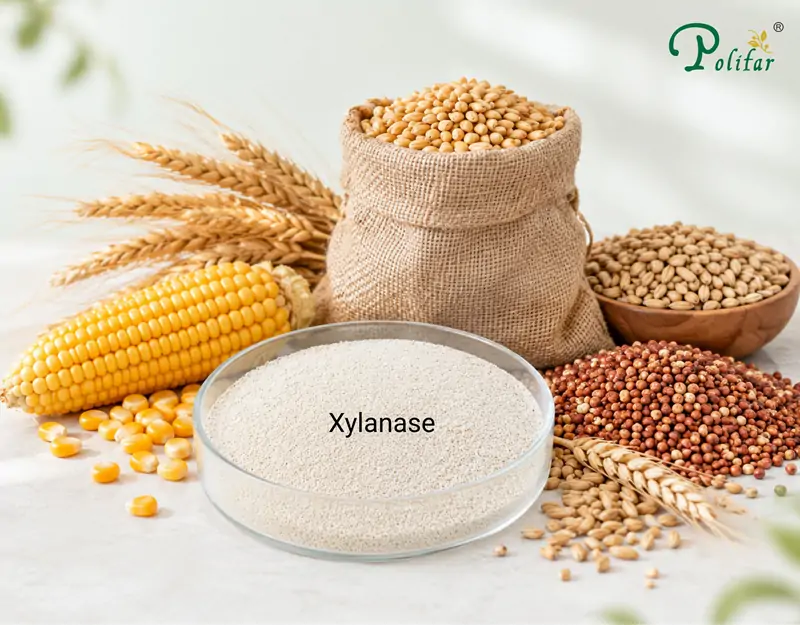
The cell wall composition, xylan structure, and viscosity issues in corn differ from those in wheat. In corn-based feed, xylanase primarily modifies cell wall structure, preserves nutrient content, and improves the overall utilization efficiency of the feed formulation.
Bran, rice bran, and other plant-based by-products typically contain large amounts of non-starch polysaccharides with complex, branched, and cross-linked structures that interact with other cell wall components, limiting the efficiency of enzymatic action. This requires experienced formulators to evaluate factors such as raw material source, processing method, dietary fiber level, and specific enzyme preparations—judgments that cannot be based solely on crude fiber content.
Raw Material and Application Judgment Comparison Table:
| Raw material type | Key Focus | Application strategies of xylanase |
| Wheat | Arabic xylan, chyme viscosity | Xylanase should be given priority |
| Rye | Soluble arabinoxylan and viscosity | Degradation effect |
| Barley | Xylan and β-glucan coexist | Complex enzyme requirements |
| Corn | Cell wall structure | Benefits were determined based on the formulation and testing |
| Wheat bran, rice bran | Complex cell wall polysaccharides | Select enzyme preparations based on the characteristics of raw materials |
| Multigrain mixed diet | Substrate composition is complex | Based on the comprehensive design of major anti-nutritional factors |
The mechanism of xylanase is not to convert fiber into sugar, but rather to modify the molecular structure of xylan, the accessibility of plant cell walls, and the physical properties of digestive tract contents—thereby influencing the absorption of nutrients from animal feed.
Xylanase primarily improves the nutritional value of animal feed by breaking down plant cell walls, reducing intestinal digesta viscosity, and eliminating anti-nutritional effects. In feed, it mainly enhances feed conversion ratio and production performance, improves animal intestinal health, lowers feed costs, and offers heat resistance and stability for convenient manufacturing and processing.
However, these benefits do not necessarily occur simultaneously across all animals, raw materials, and feeding conditions; they must be evaluated based on results from raw material analysis, enzyme preparation selection, and animal trials.
After xylosidic bonds are hydrolyzed by xylanase, the arabinoxylan within plant cell walls is broken down, destroying the cell wall structure and releasing intracellular starch and protein nutrients. Digestive enzymes in the animal can then rapidly access and break down these nutrients, effectively improving the digestibility of protein and starch.
A schematic diagram of the xylanase action process is shown below:
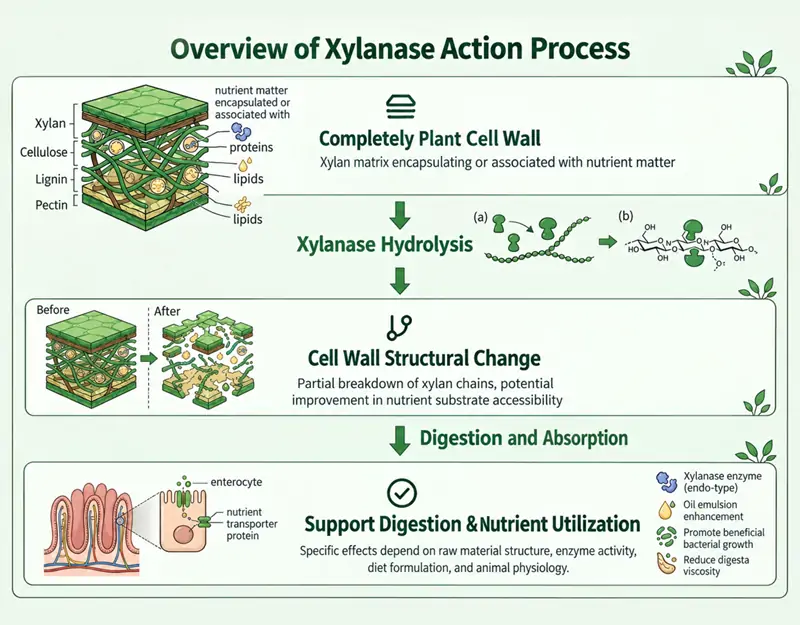
Soluble arabinoxylan has strong water-holding capacity and forms high-viscosity gels in the animal intestine, preventing effective nutrients from being absorbed and utilized. Xylanase degrades xylan and reduces intestinal digesta viscosity. At the same time, the xylo-oligosaccharides produced by hydrolysis act as natural prebiotics, promoting the growth of beneficial intestinal bacteria, inhibiting harmful bacteria such as Klebsiella pneumoniae, and fostering a more stable intestinal microecosystem.
It should be noted that not all feeds supplemented with xylanase achieve the same degree of improvement. Reducing digesta viscosity depends primarily on whether the raw materials carry a high-viscosity risk.
During hydrolysis, xylanase releases phenolic compounds such as ferulic acid, which possess antioxidant properties. These compounds effectively scavenge intestinal free radicals, reduce the concentration of oxidative products in the jejunal mucosa, upregulate immune protein gene expression, and reduce inflammatory responses in livestock and poultry.
Xylanase is primarily used in monogastric animal feed. However, differences in physiology, digestive function, dietary structure, and production targets across animal species mean that no single fixed formulation can be universally applied. Poultry is one of the most extensive application areas for xylanase, especially in diets based on wheat, rye, or other grains high in xylan.
Adding feed-grade xylanase to wheat-, barley-, and rye-based diets effectively prevents wet litter syndrome in broilers and accelerates growth rate. It also improves laying hen performance, including egg production rate, egg weight, and egg quality. Note: if the poultry diet is primarily corn- and soybean meal-based with a low proportion of wheat, additional data and experimental support may be needed; performance results from wheat-based diets should not be used as a direct reference.
After weaning, piglets face challenges including dietary changes, digestive system development, and alterations in intestinal microbiota, making them highly susceptible to diarrhea and stress responses. Xylanase can enhance amylase and trypsin activity in the pig intestine, reduce diarrhea rates in nursery pigs, promote the development of immune organs, and lower farming costs. Note: xylanase is not a medication for weaning stress; its effects are also influenced by other feed ingredients, health management practices, and additional nutrients.
For growing-finishing pigs, key considerations include average daily gain, feed intake, feed-to-gain ratio, and feed costs. Adding appropriate levels of xylanase to feed can achieve target outcomes, such as increasing daily gain by 8%–15% and reducing the feed-to-gain ratio by 0.1–0.15.
Sow diets require attention to fiber sources, intestinal function, body condition during gestation, and lactation nutrition. Xylanase effectively modifies the utilization of fiber components in feed, promoting nutrient absorption in sows.
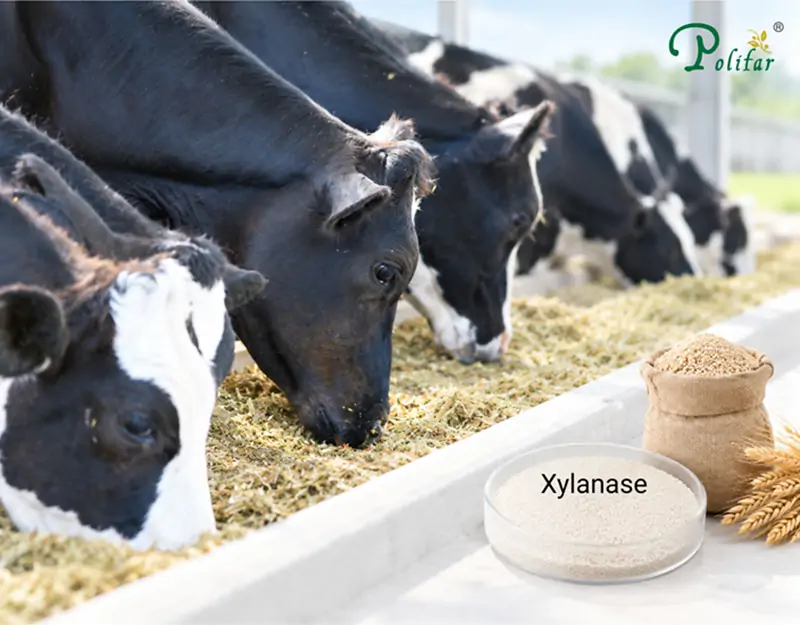
Ruminants have a more complex rumen microbial fermentation system than monogastric animals, and their fiber degradation pathways differ from those of poultry. Feed-grade xylanase is primarily added to silage. Xylanase effectively breaks down xylan in feed into xylo-oligosaccharides, promotes the growth of beneficial bacteria, and increases milk yield in dairy cows and daily weight gain in beef cattle.
Adding xylanase to aquafeed improves the digestibility of feed ingredients. Existing experiments show that xylanase improves the nutritional status and overall health of tilapia. It also enhances the utilization efficiency of feed ingredients, lowers farming costs, and reduces undigested residues in aquatic animals, effectively mitigating water pollution.
Currently, xylanases are classified into four major categories, each with distinct functions, as shown in the table below:
| Classification | Specific type | effect |
| Site of Action | Endo-β-1,4-xylanase | Randomly cleaving the β-1,4-glycosidic bonds within the xylan backbone generates short-chain xylooligosaccharides |
| β-xylosidase | It acts on the non-reducing ends of xylooligosaccharides, hydrolyzing them one by one and releasing xylose | |
| Helper side chain degrading enzymes | These include α-L-arabinosidase, α-D-glucuronidase, acetylxylanase, and phenolic esterase, which are responsible for cleaving various substituent groups on the xylan backbone | |
| Substrate Specificity | Specific xylanase | It acts specifically on xylan substrates |
| Nonspecific xylanase (bifunctional enzyme) | In addition to xylan, it can also act on cellulose or synthetic substrates | |
| Molecular Weight | High molecular weight xylanase | Most are acidic xylanases, exhibiting a broad spectrum of affinity and action for the xylan backbone. Some high-molecular-weight or bifunctional enzymes can even act on cellulose and artificial substrates |
| Low molecular weight xylanase | Most are alkaline xylanases, which have high specificity for specific xylan structures and can efficiently and randomly hydrolyze β-1,4-glycosidic bonds | |
| Protein Family | GH10 family xylanases | It has a broad substrate adaptability profile and can be used to treat xylans with varying degrees of substitution |
| GH11 family xylanases | It exhibits strong structural selectivity for the xylan backbone and is commonly used in the research and application of xylanases for feed |
Feed formulations are complex and rarely rely on a single enzyme. Xylanase is typically used in combination with β-glucanase, cellulase, protease, amylase, and phytase. However, the key to selecting enzyme preparations still depends on the proportions of major ingredients in the specific diet.
| Enzyme type | main substrate | Main function |
| Xylanase | Xylan, arabinoxylan | The focus is on addressing the anti-nutritional effects of certain cereal xylans, improving cell wall structure, and enhancing nutrient accessibility |
| β-glucanase | Specific β-glucan | In diets containing ingredients such as barley, if β-glucan is the main anti-nutritional factor, increasing xylanase may be more targeted than simply increasing xylanase |
| Protease | Protein | It is used to promote protein hydrolysis, and its substrate is different from that of xylanase |
| Amylase | Starch | It promotes starch hydrolysis and can support nutrient digestion from different substrate perspectives, together with xylanase |
| Phytase | Phytic acid and its salts | It is primarily used to release phosphorus bound to phytic acid and affects the utilization of other minerals; it addresses a different problem than xylanase |
How to Choose a Multi-Enzyme Complex?
The primary issues in the diet and recommended solutions are provided in the table below. In practice, however, decisions should be based on a comprehensive evaluation of actual conditions.
| Main problems with daily food | Selection Criteria | Enzyme combinations that can be prioritized for evaluation |
| Wheat-based diets have higher xylan-related viscosity | For arabinoxylan | Xylanase |
| Barley-based diets have a significant impact on β-glucan levels | Determined based on the actual levels of the two substrates | Xylanase + β-glucanase, or targeted single enzyme |
| There are many types of grains and plant by-products | Considering various cell wall polysaccharides | Xylanase + other targeted carbohydrate enzymes |
| Protein digestion has limitations | Different substrates require verification of combinatorial value. | Xylanase + protease, assess as needed. |
| Corn and soybean meal diets require overall digestion optimization | It is not advisable to mechanically combine all enzyme preparations. | Choose a multi-enzyme regimen based on specific nutritional limitations. |
The practical efficacy of xylanase is generally influenced by: diet type, feed manufacturing and storage conditions, the presence of enzyme inhibitors in the diet, animal species, and growth stage.
The xylan content and structure in raw materials determine whether the enzyme has sufficient and accessible substrate. Xylanase is most effective in cereal-based diets, where it addresses the anti-nutritional factor arabinoxylan. In corn-soybean meal diets, xylanase has limited effects and works better when combined with mannanase and acid protease. In sorghum-based diets, combining xylanase with protease and phytase effectively improves digestibility and utilization.
During feed manufacturing, high temperatures and prolonged exposure can cause xylanase to lose activity. Studies show that a temperature range of 80–85°C provides the best balance between xylanase activity and animal performance. Additionally, the homogeneity of mixing during processing must be ensured, and products must be stored strictly in accordance with factory requirements; improper storage can also affect the actual enzyme activity intake by animals.
Feed raw materials generally contain xylanase inhibitors, such as XIP-type and TAXI-type proteins in wheat. These inhibitors affect substrate utilization and the overall value of the formulation, and are one of the key factors causing variability in xylanase efficacy.
Different animals have different digestive systems and nutritional requirements. Young animals, with their underdeveloped digestive systems, tend to show more pronounced responses to xylanase supplementation.
Q1: Do all grain-based diets require xylanase?
A1: Not necessarily. The value of xylanase depends on the substrate structure and actual nutritional limitations of the diet. Different grain-based diets may require different enzyme combinations.
Q2: Can xylanase break down all crude fiber?
A2: Xylanase primarily targets the xylan structure and cannot be equated with cellulase or other carbohydrate enzymes. Different fiber components require corresponding enzymatic action.
Q3: Can enzyme activity units from different brands be directly compared?
A3: If enzyme activity measurement methods, unit definitions, or assay substrates differ, the values may not be directly comparable. When purchasing, it is necessary to verify the assay method, product specifications, and actual application conditions.
Research laboratories continue to develop new xylanase products, primarily focusing on improving heat resistance, achieving more precise raw material compatibility, and developing optimized multi-enzyme complexes. These advances will help further reduce costs in the feed industry and achieve the goals of high efficiency and environmental sustainability.
In summary, xylanase holds significant value in animal feed. It not only modifies plant cell wall structure but also releases nutrients, reduces the anti-nutritional effects of non-starch polysaccharides, and supports animal intestinal health, efficient nutrient absorption and utilization, and feed formulation optimization.
For Polifar, as a xylanase supplier, providing high-quality, nutritionally valuable xylanase is our responsibility and mission. Polifar will consistently help feed enterprises establish stable, cost-effective feed solutions tailored to their own raw material structures!


