 English



 |


| Color: White or Light yellow Material: corn Sales Models: wholesale Min Order: 20mt Shelf Life: two years when properly stored Packing: net 25kg/50kg/600kg in Plastic woven bags with PE lining Storage: stockpiled at the ventilated place, avoiding rain, moisture and insolation. Please handle with care to prevent bag damage, store away from toxic substances. Feed-grade methionine is primarily used as an additive in poultry and swine feed. Poultry feed—specifically for broilers and laying hens—accounts for 50% of the demand for dl-methionine. Methionine effectively promotes animal growth and improves feed utilization efficiency. Additionally, it protects the liver and heart muscle, offers antidepressant and blood-pressure-lowering effects, provides detoxification benefits, and boosts metabolism in animals such as poultry. | |||||||||
Assay/% ≥99.00
POLIFAR
293040
Product Description
| CAS No.: | 59-51-8 | Other Names: | DL-2-Amino-4-(methylthio)butyric acid |
| Molecular formula: | C5H11NO2S | EINECS No.: | 200-432-1 |
| Place of Origin: | China | Type: | Feed grade amino acid |
| Efficacy: | promote growth | Brand Name: | Polifar |
| Model Number: | Feed additives | Appearance: | White powder |
| Shelf Life: | 2 years | MOQ: | 1000kg |
| Sample: | Free,≤500g |
DL-methionine is the world's first restricted amino acid additive in the feed industry. It is a sulfur-containing essential amino acid and a chemically synthesized racemic mixture (50% L-form + 50% D-form). Its core functions are to balance dietary amino acids, promote growth, enhance immunity, and protect the liver. Its cost-effectiveness is significantly higher than that of L-methionine.
DL-Methionine Feed Grade is approved for use in all animal species. Particularly used in monogastric, it ensures an adequate supply of sulfur amino acids, especially of the essential methionine. Additionally, diets for piglets and growing pigs can show a considerable deficiency in methionine, especially when formulated to achieve low nitrogen excretion for ecological reasons. Increasing the utilization of feed resources decreases the cost of feed. Such a deficiency can be conveniently compensated by using Feed Grade DL-Methionine.
* Metabolic Pathway: D-methionine is converted to L-methionine (active form) by racemic enzymes in the liver, participating in protein synthesis.
* Utilization Rate: The bioavailability of DL-methionine is approximately 80–90% of that of L-methionine, while its cost is only 60–70% of that of L-methionine.
* Protein Synthesis: An essential amino acid, balancing dietary amino acids, promoting growth, and improving feed conversion ratio.
* Methyl Donor: Participates in the synthesis of choline, creatine, and DNA/RNA, protecting the liver and preventing fatty liver.
* Sulfur-Containing Metabolism: Synthesizes cysteine and glutathione, providing strong antioxidant effects, boosting immunity, and reducing stress.
* Fur/Eggshell: Improves feather and coat quality; enhances eggshell strength and egg quality.
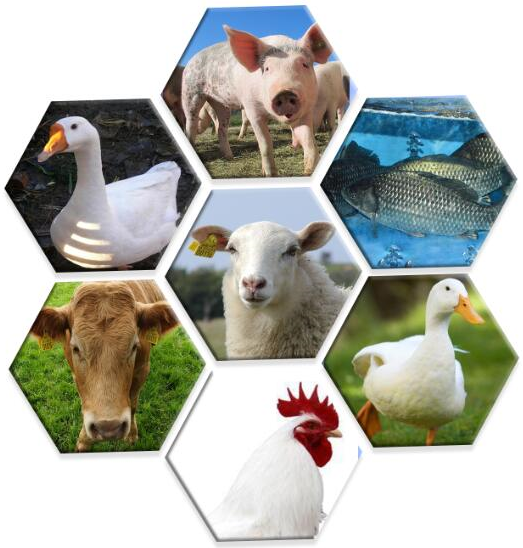
Dl- Methionine Powder Universal For All Species
* Poultry (Chicken/Duck/Goose): First limiting amino acid, essential supplementation in corn-soybean meal diets.
* Pigs (Piglets/Finishing Pigs/Sows): Balances the lysine/methionine ratio, promotes growth, and increases lean meat percentage.
* Ruminants (Cattle/Sheep): Better rumen-protected formulation, promotes lactation, increases milk protein, and improves wool quality.
* Aquaculture (Fish/Shrimp): Promotes growth, reduces stress, and improves survival rate.
* Specialty Animal Farming (Rabbit/Mink/Fox): Improves fur quality and enhances reproductive performance.
As a professional DL-methionine distributor, the Polifar team offers customized formulas for various stages of animal growth. Contact us for the best formula. For customers looking to purchase bulk DL-methionine, Polifar can supply common brands on the market such as Meihua, Fufeng, CUC, and NHU, and will provide the best procurement solutions. OEM/ODM support is available to meet diverse customer procurement needs.
* Slow Growth: Weight loss, decreased feed conversion rate, poor development.
* Metabolic Abnormalities: Weakened liver and kidney function, fatty liver, muscle atrophy.
* Poor Production Performance: Decreased egg production rate, decreased egg weight, thin eggshell; decreased milk production, poor milk quality.
* Health Problems: Rough feathers, feather pecking/vent pecking; low immunity, susceptibility to disease.
* Wasted costs, amino acid imbalance, growth inhibition.
* Increased burden on liver and kidneys, increased risk of fatty liver.
* Decreased feed intake, diarrhea, anti-nutritional effects.
| Type | DL-Methionine (99%) | L-Methionine (99%) | Calcium Hydroxymethionine (MHA-Ca, 84%) | Liquid Methionine (MHA-FA, 88%) |
| Active Ingredient | 50% L + 50% D | 100% L | 84% Methionine Equivalent | 88% Methionine Equivalent |
| Biopotency | 80–90% (vs L) | 100% | 70–80% | 75–85% |
| Price | Medium (highest cost-performance ratio) | 100% High (2–3 times DL) | Low | Low (Liquid, requires specialized equipment) |
| Stability | Excellent (high temperature resistant) | Superior | Good | General (Volatile) |
| Suitable Use Cases | Suitable for all species and all stages | Suitable for high-end young livestock / specialty breeding | Suitable for Ruminants and Aquatic Animals | Suitable for large feed mills and liquid additive systems |
Specification
Testing Item | Standard | Result |
Assay/% | ≥99.00 | 99.18 |
Loss on Drying/% | 0.10 | |
Chloride(NaCl)/% | ≤0.20 | 0.10 |
Heavy Metal(Pb)/%(mg/kg) | ≤20 | <20 |
Arsenic(As)/%(mg/kg) | ≤2 | <2 |
Packaging & Delivery
| Product Storage: | Stockpiled at the ventilated place, avoiding rain, moisture and insolation. Please handle with care to prevent bag damage, store away from toxic substances. |
| Product Packaging: | Net 25kg kraft paper bag or 500kg, 750kg, 1000kg bulk bag |
| Loading: | 16MT/20FCL' with pallets,15MT/20FCL' for bulk bag,20MT/40FCL' for bulk bag |
| Delivery: | About 1 - 2 week |
FAQ
Q1: What is the difference between DL-methionine and L-methionine?
A1: DL-methionine and L-methionine are two different forms of methionine. The difference mainly lies in their structure and biological activity.
Structure: L-methionine is a left-handed form of methionine, the form naturally found in organisms. DL-methionine is synthesized from L-methionine and contains both left- and right-handed configurations, that is, a mixture.
Bioactivity: Since L-methionine is in its natural form, it has higher bioavailability and bioactivity to organisms. In contrast, DL-methionine has low biological activity, and its right-handed configuration usually has no obvious impact on the physiological functions of animals.
Q2: Can the addition of DL-methionine improve the feed utilization of animals?
A2: Yes, the addition of DL-methionine can improve the feed utilization of animals, but this depends on the combined influence of multiple factors.
Protein Synthesis: Methionine is an essential amino acid that is essential for protein synthesis. By providing an appropriate amount of DL-methionine, methionine that may be insufficient in animal feed can be supplemented, thereby promoting protein synthesis.
Feed formulation: The addition of DL-methionine needs to be considered in conjunction with a comprehensive feed formulation. Properly proportioned feed can maximize the role of DL-methionine and improve feed utilization.
Animal breeds and growth stages: Different animal breeds and growth stages have different requirements for DL-methionine. Therefore, feed formulations need to be adjusted on a case-by-case basis to ensure optimal utilization of DL-methionine.
Q3: How to quickly distinguish between genuine and counterfeit DL-methionine?
A3: It should be almost completely soluble in water; the aqueous solution should be clear with no precipitate; it should produce little to no ash when burned; and the most accurate chromatographic test result should meet the required standards.
Q4: What Foods Contain Methionine?
A4: Methionine is an essential amino acid that the human body cannot synthesize on its own and must be obtained from food. It is primarily used for protein synthesis and supports bodily metabolism.
Foods rich in methionine are listed as follows:
Plant sources: soybeans, Brazil nuts, oats and wheat germ.
Egg and dairy products: eggs, milk, cheese.
Meat: lean meats such as beef, pork and chicken.
Seafood: salmon, tuna, shrimp, scallops, etc.
Q5: How Much Methionine Per Day for Horses?
A5: Nutritionists recommend horses consume methionine at 1/3 of their daily lysine intake, another essential amino acid for equine muscle development.
A 500kg (1100lb) horse requires approx. 27g lysine daily, equating to 9g methionine.
Dosage varies by physiological status:
Maintenance: 7.5g/day
Intense exercise/training: 8–10g/day
Growth & breeding phase: 8–16g/day