
 English

Views: 19 Author: Site Editor Publish Time: 2019-07-17 Origin: Site


Those who run livestock farms rely heavily on amino acids. Amino acids are the core nutrients of protein. Pigs, chickens, ducks, geese, cattle, sheep, fish, shrimp, and crabs on farms all need sufficient nutrition during their growth and fattening periods. Therefore, adding various amino acids to animal diets is an essential feed additive to improve production efficiency.
Common amino acids required by animals include lysine, methionine, threonine, tryptophan, histidine , leucine , isoleucine, arginine, valine, and phenylalanine. These are essential amino acids that animals cannot synthesize on their own and must obtain from their food.
The table below clearly shows the essential amino acids, non-essential amino acids, and conditionally essential amino acids (unclassified). You can choose the appropriate amino acids based on the type of animals you are raising. Alternatively, you can consult a professional animal nutritionist for assistance.
| Classification | Amino acids | Illustrate |
| Essential amino acid EAA(Animals cannot synthesize this themselves; it must be provided by their feed.) | Lysine | First limiting amino acid in pigs and poultry |
| Methionine | Sulfur-containing amino acids, especially in poultry, are often the first limiting amino acids. | |
| Tryptophan | ||
| threonine | ||
| Isoleucine | Branched-chain amino acids | |
| Leucine | Branched-chain amino acids | |
| Valine | Branched-chain amino acids | |
| Phenylalanine | It can be partially converted into tyrosine. | |
| Histidine | ||
| Arginine | Essential for young animals, but can be partially synthesized by adult pigs. | |
| Non-essential amino acids NEAA(It can synthesize its own nutrients and usually does not require feed.) | alanine | |
| Aspartic acid | ||
| glutamic acid | ||
| Asparagine | ||
| Serine | ||
| proline | ||
| Conditional essential amino acids(Specific species/physiological stage/require exogenous supplementation under stress) | glycine | Poultry synthesis deficiency, listed as essential |
| Tyrosine | Converted from phenylalanine; essential when phenylalanine is insufficient. | |
| Cysteine | Converted from methionine; essential when methionine is insufficient. | |
| glutamine | Intestinal repair, weaned piglets, and essential under stress. | |
| Arginine | Young piglets and chicks have insufficient synthesis of their own nutrients. | |
| proline | Young piglets, rapid growth stage | |
| Taurine | Essential non-protein amino acids for cats and aquatic animals (shrimp, salmon, trout) |
It is important to note that:
Species differences:
There are 10 essential amino acids in pigs, which are all the amino acids listed in the EAA table above.
In addition to the 10 essential amino acids required by pigs, poultry also need to supplement with glycine and serine because their own synthesis rate is too slow.
Ruminants can synthesize most amino acids in their rumen, but they need to supplement with rumen-derived methionine and lysine.
Aquatic animals have a higher requirement for arginine and taurine than terrestrial animals.
Cats especially need taurine supplements.
The types and amounts of amino acids required vary depending on the animal and its growth stage. The table below can help new farm owners identify the specific function of each amino acid.
| Amino acid name | Typical raw material gap | Main physiological functions and breeding benefits |
| L-Lysine | Commonly lacking in grain raw materials (such as corn) | It promotes skeletal muscle protein deposition, increasing daily weight gain and lean meat percentage. |
| DL-Methionine | Soybean meal and other plant proteins are relatively deficient | It provides organic sulfur, which promotes feather growth, egg production, and liver detoxification. |
| L-Tryptophan | Lower in plant protein and corn by-products | Synthesizes 5-hydroxytryptamine, which regulates the central nervous system, increases food intake, and relieves stress. |
| L-Threonine | Second/third protein deficits are more likely to occur in low-protein diets. | It participates in the synthesis of intestinal mucin and maintains the mucosal barrier and intestinal immunity. |
| L-Isoleucine | Grains and plant proteins are often insufficient | Branched-chain amino acids participate in energy metabolism and muscle protein synthesis, and enhance lactation performance. |
| L-Leucine | The proportion of some plant proteins is relatively low. | Branched-chain amino acids stimulate the mTOR pathway to promote muscle protein synthesis and regulate blood sugar. |
| L-valine | Low-protein diets often contain limiting amino acids. | Branched-chain amino acids maintain lactation and promote mammary gland development and piglet growth. |
| L-Phenylalanine | Limited content in cereal protein | It synthesizes tyrosine precursors and participates in the synthesis of thyroxine, adrenaline, and melanin. |
| L-histidine | Young animals are prone to deficiencies in their diet. | It synthesizes histamine, which participates in immune regulation, gastric acid secretion, and erythrocyte production. |
| L-arginine | Young piglets and chicks have insufficient synthesis of their own nutrients. | It synthesizes nitric oxide (NO), which dilates blood vessels, improves blood flow, and promotes sperm production and immunity. |
| L-alanine | Usually not lacking | It participates in gluconeogenesis, maintains stable blood glucose levels, and is the main amino transporter during muscle breakdown. |
| L-Aspartic acid | Usually not lacking | It participates in the tricarboxylic acid cycle and the urea cycle, providing energy and synthesizing purines and pyrimidines. |
| L-glutamic acid | Usually not lacking | The brain's main energy substrates synthesize glutamine and GABA, which maintain gut health and taste. |
| L-Asparagine | Usually not lacking | It participates in nitrogen metabolism and protein synthesis, and maintains the function of the central nervous system. |
| L-serine | Poultry synthesis rate is insufficient | It synthesizes glycine and cysteine precursors, participates in the synthesis of phospholipids and neurotransmitters, and promotes feather growth. |
| L-proline | Young piglets, rapid growth stage | It synthesizes collagen and cartilage, maintaining the integrity of joints, intestines, and blood vessel walls. |
| L-glycine | Poultry synthesis deficiency, listed as essential | It synthesizes purines, heme and glutathione, participates in uric acid excretion, and promotes feather and eggshell formation. |
| L-tyrosine | Phenylalanine deficiency is necessary | It synthesizes thyroid hormones, adrenaline, dopamine, and melanin, regulating coat color and stress response. |
| L-cysteine | Methionine deficiency is essential | Sulfur-containing amino acids synthesize glutathione, an antioxidant, and participate in the formation of keratin (feathers, hooves). |
| L-glutamine | Weaned piglets, essential for stressful conditions | It is the main energy source for intestinal epithelial cells, and it repairs the intestinal mucosa, enhances immunity, and resists stress. |
| Taurine | Essential for cats and aquatic animals; non-protein amino acids for mammals | It regulates bile acid metabolism, maintains heart and retinal function, and has antioxidant and immune-regulating effects. |
The table above shows that amino acids play a unique role in animal growth, helping animals obtain precise nutrition, reduce protein costs, improve feed conversion rates, reduce nitrogen emissions, improve overall breeding efficiency, reduce production costs, promote green, sustainable and healthy development, and help them win in fierce competition.
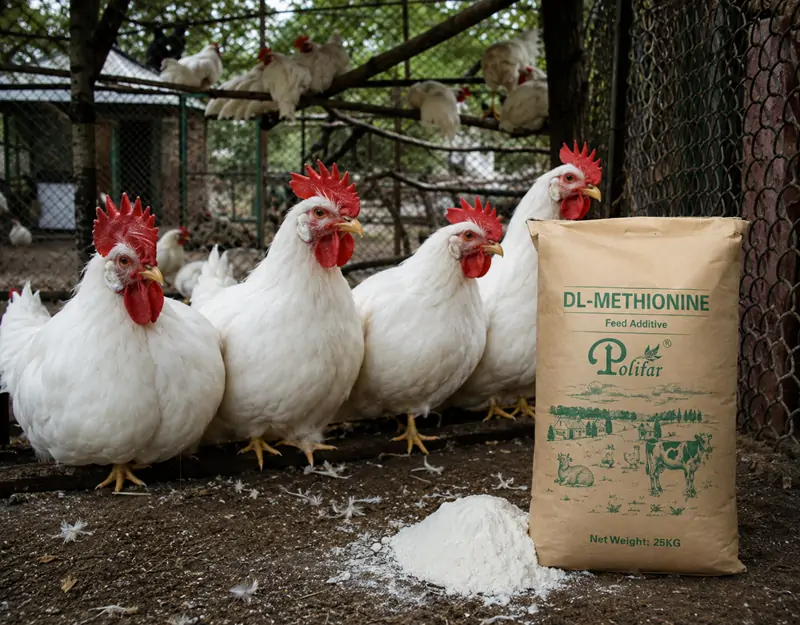
In traditional farming practices, sufficient protein is added to animal feed to ensure animals receive enough amino acids. However, over time, the drawbacks of this approach have become increasingly apparent. When an animal is deficient in a particular amino acid, simply increasing the crude protein level can lead to an excess of other amino acids.
An imbalance of amino acids in an animal's body can manifest as either a deficiency or an excess. Both can lead to various problems. A deficiency in amino acids can impair protein synthesis, slow animal growth, reduce feed utilization, weaken the immune system, and result in poor-quality final products. An excess of amino acids can overburden the animal's metabolism, cause excessive nitrogen emissions, and have adverse effects on both the animal's health and the environment.
Modern animal nutrition science proposes the concept of ideal protein, which involves adjusting various amino acids in the optimal ratio according to the animal's actual nutritional needs. For example, a low-protein diet combined with precise amino acid supplementation. This approach reduces the amount of high-protein ingredients used while supplementing with appropriate amounts of lysine, methionine, threonine, tryptophan, and other amino acids based on the animal's requirements. This method satisfies the animal's amino acid needs while reducing unnecessary excess protein intake, thus avoiding adverse effects on the animal.
Therefore, amino acid balance is very important, firstly because it saves production costs, and secondly because it allows animals to absorb nutrients more effectively and comprehensively. Precise, balanced, and efficient utilization of amino acids is of great significance to the profitability of animal husbandry.
Animal feed ingredients typically include soybean meal, rapeseed meal, fish meal, meat and bone meal, corn, wheat, and other plant or animal protein ingredients. These ingredients all contain different amino acids, so corresponding nutritional formulas must be designed based on the different ingredients.
With the development of modern fine chemicals, high-purity feed-grade or food-grade amino acids can now be obtained through fermentation, chemical synthesis, and other methods. The Polifar Group can provide these high-quality, high-purity samples.
Broilers and laying hens have a high dependence on amino acids.
When the most important amino acids in broiler feed—lysine, methionine, threonine, and valine—are imbalanced, the daily weight gain and feed conversion ratio of broilers will decrease. It will also affect carcass composition, muscle deposition , feather growth, and immune status.
An imbalance of amino acids in the feed of laying hens can lead to a decrease in egg production rate and egg weight, thinner eggshells, and an overall decline in egg quality.
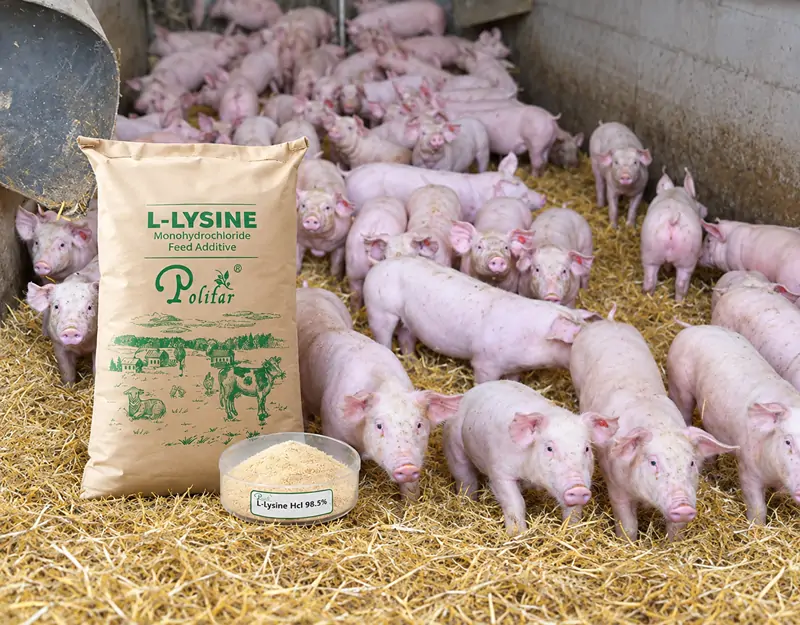
The first limiting amino acid for pigs is lysine. The amino acid requirements vary at different stages of a pig's growth cycle. Polifar provides recommended intake levels for each growth stage. Feel free to leave a message if you'd like.
During the piglet stage, attention should be paid to piglet growth, intestinal development, and improving their immunity. For finishing pigs, attention should be paid to lean meat deposition and feed efficiency. Sows should have their nutritional programs adjusted according to their reproductive stage. It is crucial to avoid using the same nutritional program for pigs at different growth stages.
When considering adding amino acids to cattle and sheep feed, it is necessary to take into account the influence of rumen microorganisms on the protein in the feed. In production systems such as high-yielding dairy cows, the precise supply of protein and amino acids is of great significance for maintaining milk production performance.
High-density aquaculture is one of the mainstream methods in modern farming, but fish and shrimp populations are prone to stress in such environments. Adding appropriate amounts of amino acids to the feed can effectively reduce the impact of the environment on the growth of fish and shrimp, accelerate growth, and improve feed utilization.
Society as a whole is progressing and developing. People consider cats, dogs, and other furry friends as family members. Adding appropriate amounts of taurine to cat food can effectively prevent heart disease or blindness in cats. Dog food often contains lysine and methionine to help dogs' muscle and bone development and maintain a shiny coat.
Q1: How do I calculate the amino acid requirements in animal feed?
A1: Using an ideal protein model, with lysine as the reference benchmark (set to 100%), the requirements for other essential amino acids are calculated proportionally; at the same time, the animal's breed, growth stage, daily weight gain, expected feed intake, and standard ileal digestibility (SID) of the raw materials are combined for precise calculation.
Q2: How to identify low-quality or adulterated amino acids?
A2: Physical screening: Check appearance, color, odor, water solubility (observe for any insoluble precipitates) and moisture absorption/caking.
Physicochemical index determination: Determine melting point, optical rotation (to verify the effective L-type configuration), and total nitrogen content (to investigate adulteration with non-protein nitrogen such as urea and ammonium salts).
Instrumental quantitative analysis: High performance liquid chromatography (HPLC) or near-infrared spectroscopy (NIR) are used to accurately determine purity and impurity components.
Q3: Are amino acids stable when mixed with other vitamins and minerals?
A3: It is relatively stable in dry, low-temperature environments, but its stability decreases under high humidity or high heat conditions: trace elements (such as copper and iron) can catalyze vitamin oxidation, and when exposed to moisture, amino acids are prone to undergo Maillard reactions with reducing sugars and lose their activity, or chelate with high-valence metal ions. Therefore, premixes require strict control of moisture and storage temperature, and it is generally recommended to store vitamins and trace elements in separate compartments.
Amino acids play a crucial role throughout an animal's entire growth cycle, participating in protein synthesis, muscle growth, gut health, and immune defense. Modern feed companies utilize amino acid feed additives precisely to help farmers achieve precise nutrition, low-protein diets, improved feed efficiency, and the promotion of sustainable farming.
In the future, advancements in animal research will lead to further optimization of feed formulations, better meeting the nutritional needs of animal growth. Polifar remains committed to providing the highest quality amino acid additives to global users and offering one-stop service to global buyers. Helping farmers worldwide achieve long-term success!


