





Choline chloride is a vitamin B4 that directly affects poultry growth rate, liver health, metabolism, egg production capacity, and feed conversion efficiency. Poultry are highly dependent on the feed additive choline chloride. A deficiency can lead to a variety of problems, such as short and thick bones in young chicks, fatty liver in adult laying hens, and decreased daily weight gain in adult broilers.
This article will provide scientific diagnostic and supplementation reference solutions for our customers by focusing on the specific symptoms, hazards, and remedial methods of choline chloride deficiency in poultry.
1. How to Determine If Poultry is Deficient in Choline Chloride?
(1) Common clinical phenomena for judgment
Young poultry (0-6 weeks old)
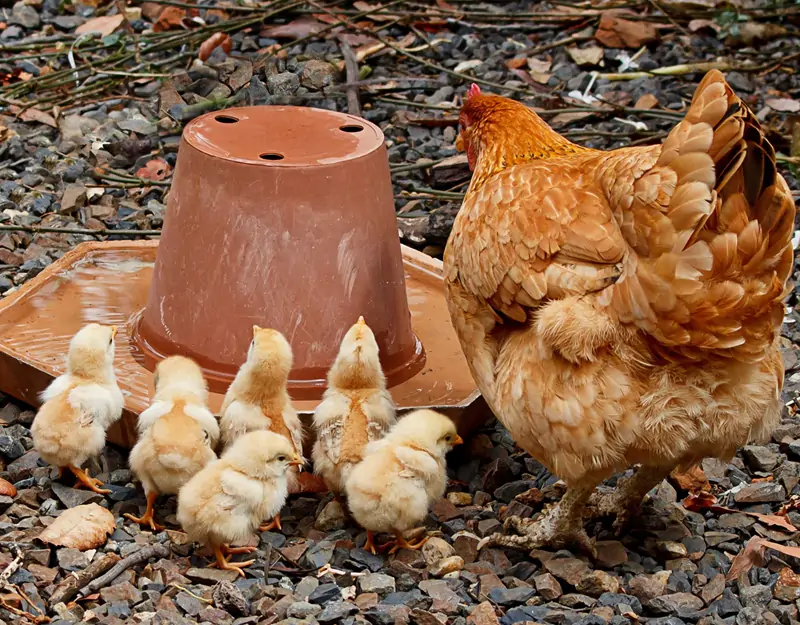
Acute choline chloride deficiency is most likely to occur during the 0-6 week growth stage of poultry. Specific symptoms are as follows: Delayed growth and development, abnormal feathers, slower growth rate in chicks, and inconsistent body size.
Abnormal foot joints in young birds, with mild swelling and flattening, and pinpoint hemorrhages around the joints. At this stage, young birds exhibit unsteady gait, unable to support their weight on their feet, resulting in difficulty standing and walking. If choline supplementation is not provided in time, the condition will worsen, leading to the following symptoms:
Young birds severely lacking the Feed Additive Choline Chloride Silicon Carrier become completely paralyzed, only able to crouch on the ground, and experience increased mortality, typically 3-5% higher than the normal group.
Adult Laying Hens/Breeding Hens
When the choline supplement in feed is too low, it will lead to reduced egg production in laying hens and reduced hatchability in breeding hens.
Laying Hens: Egg production is lower than normal, egg weight decreases, the number of defective eggs (such as soft-shelled eggs and broken eggs) increases, and the peak laying period is shortened.
Breeding Hens: Fertilization and hatchability rates both decline significantly, weak chicks have difficulty hatching, the proportion of dead embryos increases, and the quality of hatching eggs declines significantly.
The flock is more prone to fatigue, prefers to lie down, and is reluctant to move.
Broilers
When broilers lack choline, it leads to lower daily weight gain, rough, dull feathers, difficulty walking, even paralysis, and typical fatty liver.
Abnormal Feathers: Broiler flocks exhibit significant weight disparities, lower feed utilization, and abnormal feather growth, such as rough, delayed coverts, and decreased luster.
Leg Diseases: Broilers have short, thick feet, swollen joints, difficulty walking, and in severe cases, leg weakness and paralysis.
Fatty liver cannot be diagnosed visually and must be detected through necropsy. If a necropsy reveals an enlarged, yellowish, and easily ruptured liver in a broiler flock, feed adjustments should be made to prevent further deterioration of the symptoms.
Of course, most of the above relies on visual assessment of poultry physiological conditions; some require necropsy for detection. To avoid misdiagnosis, scientific methods are still necessary for differentiation.
(2) Scientific Differential Diagnosis
The clinical symptoms of choline chloride deficiency are often easily confused with those of manganese, biotin, and methionine deficiencies, as well as some liver diseases. To avoid misdiagnosis, careful differentiation is necessary to prevent secondary harm to poultry. The following table can help you distinguish between them effectively:
2. Harmful Effects of Insufficient Choline Chloride in Feed Additives
(1) It affects the healthy growth of poultry, leading to reduced growth performance and increased feed costs.
(2) Healthy growth of poultry is essential for ensuring economic benefits from poultry farming. When poultry mortality is too high, and their growth and health conditions are substandard, their quality decreases after entering the market, directly impacting the output of economic benefits from poultry farming.
3. How to Remedy Choline Deficiency in Poultry?
Upon discovery of choline deficiency, the feed program should be adjusted as soon as possible.
(1) Emergency Remedies
Daily Drinking Water
Use a 70% choline chloride solution, following the veterinarian's recommended dosage, for 3-5 consecutive days. Note: Choline chloride is highly acidic (pH 5-6) and should not be dissolved in the same water container as vitamins (especially VA, VD, VE, VK3), antibiotics (such as penicillin), or electrolytes. Feed them separately or at least 2 hours apart.
Timely Feed Replacement
Insufficient nutrients in the feed are one of the factors leading to decreased resistance and problems in poultry. Feed should be adjusted promptly according to the type of poultry. Customize or formulate the optimal feed formula from a feed mill to increase the choline content in the feed.
Specific guidelines are available, but actual addition should be based on the formula design and breed requirements. In hot summer environments, the level may need to be appropriately increased. In high-fat diets, a moderate increase is recommended. If methionine is added, further evaluation is necessary.
(2) Long-Term Prevention Plan
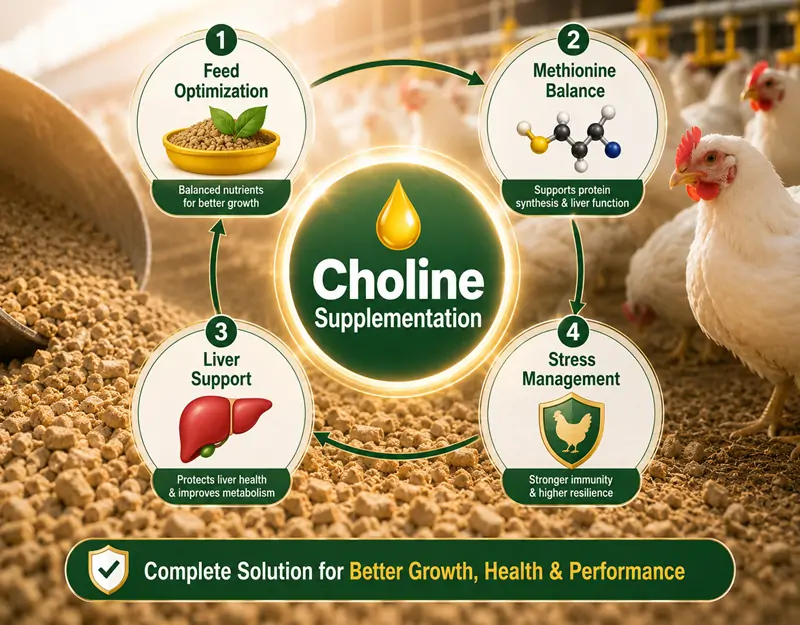
Modern farming practices emphasize precision. Besides the emergency measures mentioned above for choline deficiency, the synergistic effect of nutrients in daily feed is crucial. Choline is essential, but methionine, betaine, vitamin E, vitamin B12, folic acid, and inositol should also be supplemented to optimize methyl donor balance and provide synergistic nutrition.
Feed formulations should be adjusted concurrently, and feed processing and storage should be optimized promptly. Choline Chloride Silicon Carrier for Animals is highly hygroscopic and destructive. When using it in premixed or complete feeds, care should be taken to ensure that choline chloride is not stored mixed with other vitamins or trace elements (such as copper sulfate and ferrous sulfate) for extended periods. When mixing feed, avoid using damp, poor-quality, moldy, or spoiled raw materials. Add choline chloride last, and use the mixture within one month.
High summer temperatures can easily cause stress in poultry. Timely adjustment of the ambient temperature is crucial to ensure normal feed intake and reduce nutrient deficiencies.
4. Common Misconceptions
(1) Soybean meal in feed contains a lot of choline, so there's no need to add choline
This is not true. Although soybean meal contains a lot of choline, it is bound choline with low bioavailability. Free choline chloride needs to be supplemented, as it has high bioavailability.
(2) Fatty liver in poultry is due to overnutrition
The truth is that excessive energy intake in poultry can induce fatty liver, but insufficient energy and a lack of choline vitamins can still cause fatty liver.
5. How to Choose the Most Suitable Vitamin B4?
Currently, there are four main forms of choline on the market: 50% plant-based carrier powder,60% silica carrier powder, 70% choline chloride aqueous solution, and 98% high-purity choline chloride raw powder. For a long-term, stable supply, consider Polifar, a professional choline chloride supplier. As a professional distributor of feed additives, Polifar can provide you with the best 60% choline chloride solution over the long term. Optimal recommendations are provided for each application scenario, allowing farms to choose according to their specific needs.
Conclusion
Choline deficiency is easily identifiable. In young poultry, observe the bones; in laying and meat poultry, observe the liver. Early and timely choline supplementation ensures lively and healthy poultry.


