If you need food ingredients, feed additives, or feed premix, please feel free to contact us. We have an excellent technical team, which can be designed according to customers' requirements.

 English



 |


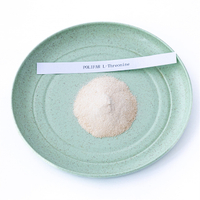
| Color: White crystalline powder Sales Models: wholesale Min Order: 1000kg Shelf Life: Two years when properly stored Packing: Net weight 25kg per carton Storage: Before opening: Taurine should be kept away from light, heat, and moisture, and kept away from oxidants and toxic or harmful substances. Temperature ≤25℃, humidity ≤65%. After opening: Store in a cool, dry place (≤25℃), avoid prolonged exposure, and it is recommended to use within 1–3 months. | |||||||||
Overview
| CAS No.: | 107-35-7 | Other Names: | 2-Aminoethanesulfonic Acid |
| MF: | C2H7NO3S | EINECS No.: | 203-483-8 |
| Place of Origin: | China | Type: | Food grade |
| Efficacy: | Nutritional Supplements | Brand Name: | Polifar |
| Model Number: | food additives | Appearance: | White powder |
| Shelf Life: | 2 years | MOQ: | 1000kg |
| Sample: | Free, ≤500g | Criteria Implemented: | GB 5009.169-2016 |
Product Description
Nutritional Supplements
Taurine is a sulfur-containing amino acid naturally found in animal tissues (heart, brain, retina, muscles). The human body has a weak ability to synthesize it and must obtain it from food/additives. Therefore, taurine is often used as a nutritional supplement in food. Food-grade taurine ≥98.5% (dry basis) appears as white crystals or a white crystalline powder, with a slightly acidic taste and no odor. It is readily soluble in water, very slightly soluble in 95% ethanol, and insoluble in anhydrous ethanol, ether, and acetone. It is stable to heat, light, and air, and does not easily absorb moisture or clump.
1. Promotes Infant and Toddler Development: Taurine, a nutritional enhancer, supports brain tissue, intelligence, and retinal development.
Relieves Physical Fatigue: Taurine, a food nutritional additive, improves exercise endurance, accelerates recovery, and reduces muscle damage.
2. Protects the Cardiovascular System: Taurine, a nutritional supplement, regulates blood lipids and blood pressure, and improves vascular endothelial function.
3. Boosts Immunity: The amino acid taurine has antioxidant and anti-inflammatory properties, enhancing the activity of immune cells.
4. Protects Vision: Taurine, a food ingredient, maintains retinal function and relieves eye strain.
5. Regulates Metabolism: Taurine improves insulin sensitivity, aiding in blood sugar and weight control.
6. Protects the Liver: Taurine, a food nutritional supplement, assists in the repair of chemically induced liver damage.

1. Functional Beverages: Energy/Sports Drinks (250mL approx. 1000mg).
2. Infant Formula: Milk Powder, Special Medical Foods (mandatory fortification).
3. Health Foods: Tablets, Capsules, Oral Liquids (enhancing immunity, relieving fatigue).
4. Dairy Products: Modified Milk, Yogurt, Milk Beverages.
5. Baked Goods/Grains: Bread, Biscuits, Nutritional Cereals.
6. Pet Food: Cat Food Made with Taurine for Animal Nutrition (Mandatory Addition, Prevents Blindness and Cardiomyopathy).
1. Safety and Compliance: Approved in multiple countries (GB, FDA, EFSA), GRAS recognized as safe.
2. Multiple Functions: Covers anti-fatigue, eye protection, heart health, immunity, and infant nutrition.
3. Processing-Friendly: Heat-stable, easily soluble in water, does not affect flavor or color.
4. Market Demand: Core ingredient in energy drinks, infant formula, and health supplements.
5. High Cost-Effectiveness: Factory direct supply of mature taurine synthesis technology, low cost, small addition amount with clear effects.
6. Health Trends: The appropriate addition of taurine as a nutritional supplement aligns with the needs of sports nutrition, the senior economy, and precision nutrition.
Specification
| Test item(s) | Limit | |
| Description | Colorless or white crystals, or a white crystalline powder | white crystalline powder |
| Identification | Positive | Positive |
| Clarity and color of solution | Clear and colorless | Meet the requirement |
| Loss on Drying | ≤0.2% | 0.06% |
| Residue on Ignition | ≤0.1% | 0.05% |
| Chloride | ≤0.011% | <0.01% |
| Sulfate | ≤0.010% | <0.01% |
| Ammonium | ≤0.02% | <0.02% |
| Heavy Metals | ≤10ppm | <5ppm |
| Iron | ≤10ppm | <5ppm |
| Related Substance | ≤0.2% | <0.2% |
| PH Value | 4.1 ~ 5.6 | 5.02 |
| Assay | 98.5% ~ 100.5% | 99.12% |
| Microbiological Control | ||
| Total Aerobic Microbial Count | ≤100cfu/g | <100cfu/g |
| Total Yeast & Mold | ≤10cfu/g | <10cfu/g |
| Coliform | Negative | Not detected |
| Salmonella | Absent in 10g | Complies |
Packaging & Delivery
| Product Packaging: | 25kg paper drum, 200kg plastic drum, IBC tank, ISO tank |
| Product Storage: | Stockpiled at the ventilated place, avoiding rain, moisture and insolation. Please handle with care to prevent bag damage, away from toxic substances. |
| Loading: | 13.5MT/20FCL'; 10MT/20FCL' with pallets |
| Delivery: | About 1 - 2 week |
FAQ
Q1. Is food-grade taurine natural?
A1: Taurine, a food additive, is naturally found in animal tissues (such as heart, muscle, and seafood). However, commercially available food-grade taurine is mostly chemically synthesized (using the ethylene oxide method), with the same structure as natural taurine, and therefore no difference in safety.
Q2. Do you provide Halal and Kosher certifications?
A2: The Polifar team can provide Halal, Kosher, ISO, and HACCP certifications. Please confirm with our sales representative when inquiring about pricing.
Q3. Does Bulk taurine contain allergens?
A3: Factory-supplied taurine itself does not contain common allergens (such as gluten, dairy products, soy, nuts, etc.). However, there may be a risk of cross-contamination between different production lines. We recommend requesting the supplier to provide an allergen declaration or a certificate of no allergens.
Q4. Can pure taurine be used in ordinary food?
A4: Regulations vary in different countries.
China: Taurine is a nutritional fortifier and is permitted for use in infant formula, special dietary foods, and beverages. For specific scope and dosage, please refer to GB 14880 and GB 2760. It should not be added arbitrarily to ordinary snacks or staple foods.
United States: It is recognized as GRAS by the FDA and can be widely used in beverages, supplements, and ordinary foods.
European Union: Permitted as a dietary supplement ingredient.
Q5. Can taurine be used in pet food?
A5: Yes. Taurine is especially important for cats (cats have a weak ability to synthesize it themselves) and is widely used in cat food, dog food, and pet nutritional pastes. Food-grade or animal nutrition-grade taurine can be used.
Q6. Can you provide technical data (TDS/MSDS/COA)?
A6: Polifar, as a company with decades of experience in distributing taurine, can provide:
TDS (Technical Data Sheet)
MSDS (Material Safety Data Sheet)
COA (Certificate of Assessment)
Allergen Statement
Nutritional Facts
Q7. How soluble is taurine powder?
A7: Taurine is readily soluble in water (approximately 50–100 g/L, 20°C), but insoluble in organic solvents such as ethanol and ether. The aqueous solution is clear, colorless, and nearly neutral.
Q8. How stable is taurine in beverages?
A8: Taurine is stable within a pH range of 4–8, heat-resistant (can withstand short-term heating to 100℃), and suitable for hot-filling, UHT, and pasteurization processes. It exhibits good long-term stability in energy drinks and sports drinks.
Q9. Can taurine and caffeine supplements be used together?
A9: Yes. These two ingredients are a classic combination in energy drinks, with synergistic effects: taurine combats fatigue and protects the myocardium, while caffeine provides a stimulating and refreshing effect. This has been confirmed by numerous safety studies.
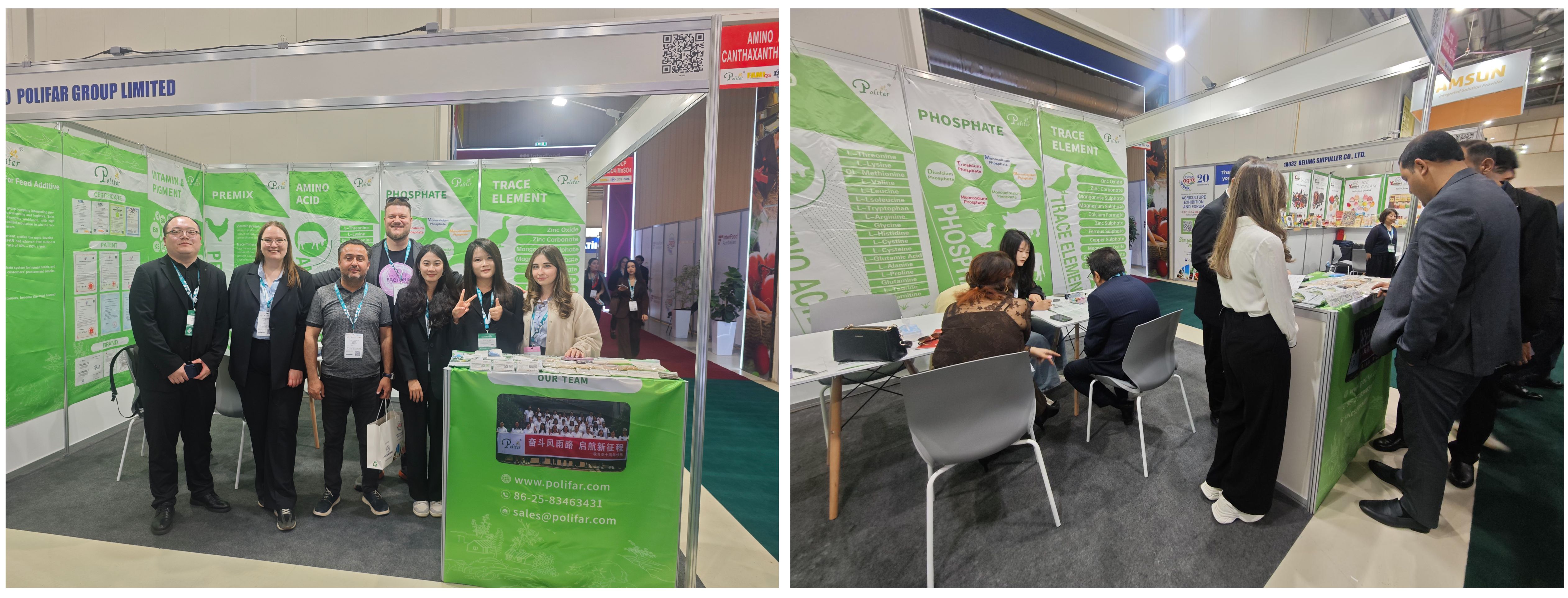
As a professional supplier of feed additives and food additives, Polifar is dedicated to offering you a one-stop procurement service solution.
As your reliable trading partner, Polifar supplies a full portfolio of food additives, feed additives and veterinary products. With a mature service system, we solve all difficulties in your procurement process:
For distributors: Provide integrated one-stop solutions to lower capital occupancy and management costs.
For farmers: Offer full-cycle technical support from product selection to practical application, ensuring breeding benefits.
For large enterprises: Deliver stable supply and professional formula customization to maintain stable and controllable supply chains.
For food processing enterprises: Implement strict batch quality control and provide complete compliance documents to meet high standard requirements from downstream clients.
We believe professional service is far more than product supply. It is committed to creating a hassle-free procurement experience for you: accurate sourcing, smooth execution, and reliable follow-up support.