1. What is a feed additive premix?
A feed additive premix is an intermediate product made by uniformly mixing one or more feed additives with a suitable carrier or diluent in a certain proportion.
Its main functions are:
Improve the uniformity of additive dispersion
Facilitate measurement and use
Improve stability
Reduce production errors
Improve animal production performance
Premixes are usually not fed directly to animals, but are added to compound feed in a certain proportion.
2. Classification of Feed Additive Premixes
(1) Compound Premixed Feed
This refers to a homogeneous mixture mainly composed of any two or more types of nutritional feed additives , including mineral trace elements, vitamins, and amino acids, combined with other feed additives, carriers, and/or diluents in a certain proportion. The content of the nutritional feed additives must meet the basic nutritional needs of the animal at its specific physiological stage. The addition amount in compound feed, concentrate supplement, or animal drinking water must be no less than 0.1% and no more than 10%. Compound premixes integrate multiple components such as vitamins, trace elements, amino acids, antioxidants, and probiotics. They are nutritionally comprehensive, scientifically formulated, and suitable for most large-scale farming scenarios. They are currently the most widely used type of premix among farmers.
(2) Micronutrient Premixed Feed
This refers to a homogeneous mixture of two or more mineral micronutrients with a carrier and/or diluent in a certain proportion. The content of these mineral micronutrients must meet the micronutrient requirements of the animal at a specific physiological stage. The addition amount in compound feed, concentrate supplement, or animal drinking water should be no less than 0.1% and no more than 10%.
Micronutrient premixes primarily contain essential minerals for livestock, poultry, and aquaculture, such as iron, zinc, copper, manganese, selenium, and iodine. They are mainly used to compensate for mineral deficiencies in the basic diet, addressing issues such as poor bone development, rough fur, and decreased reproductive performance. They are often used for nutritional fortification of basic feeds.
(3) Vitamin Premixed Feed
This refers to a homogeneous mixture of two or more vitamins with a carrier and/or diluent in a certain proportion. The vitamin content should meet the vitamin requirements of the animal at a specific physiological stage. The addition amount in compound feed, concentrate supplement, and animal drinking water should be no less than 0.01% and no more than 10%. Vitamin premixes focus on bioactive nutrients such as vitamins A, D, E, and B complex. Vitamins are extremely sensitive to environmental temperature, humidity, and light, and are core substances for maintaining animal metabolism, immune function, and physiological processes. They can effectively prevent paralysis, diarrhea, and growth retardation caused by vitamin deficiencies in livestock and poultry.
Although premixed feed additives are divided into these three main categories, the variety of commercial premixes varies depending on the number of vitamins they contain, such as vitamin A and D premixes, vitamin A, D, and E premixes, and multivitamin premixes. Therefore, buyers should carefully check the ingredients of the premix and purchase according to their needs.
3. How should different animals choose their corresponding feed premixes?
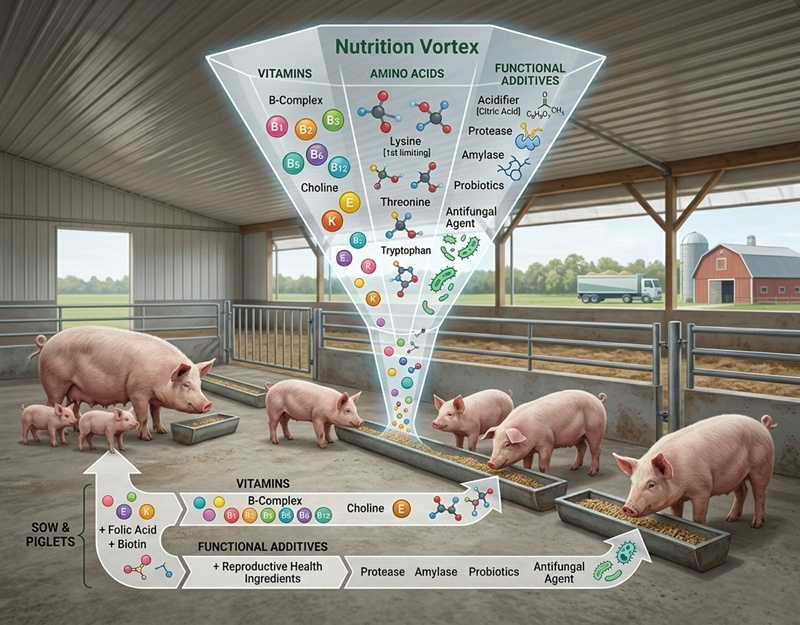
(1) Pig Premixes
Large-scale pig farms generally focus on: pig growth rate, feed conversion ratio, and carcass quality.
Vitamins: Full-spectrum VB, choline, VE, VK; fortified folic acid and biotin for sows.
Amino acids: Lysine, threonine, methionine, tryptophan (lysine is the first limiting amino acid for pigs).
Functional additives: Acidifiers (citric acid), protease, amylase, probiotics, antifungal agents; reproductive health components added for sows.
Piglet/Nurse Premix: High digestible nutrition, zinc oxide to prevent diarrhea, promotes intestinal development.
Finishing Pig Premix: Focuses on promoting weight gain and optimizing feed conversion ratio. Premixed formula for pregnant/lactating sows: Fortified with folic acid, vitamin E, calcium and phosphorus to increase litter size and milk production.
(2) Poultry Premix
Trace Elements: Iron, Zinc, Manganese, Selenium, Iodine (Manganese requirement is highest among all animal species, preventing poultry slippery tendon disease).
Amino Acids: Methionine is the first limiting amino acid in poultry (distinguishing it from lysine in pigs).
Commonly used broiler premix ingredients include:
Fortified with B vitamins, lysine, and methionine; selenium yeast promotes muscle growth; added growth-promoting enzymes.
Moderate calcium and phosphorus content, emphasizing skeletal muscle development and rapid market readiness.
Commonly used laying poultry premix ingredients include:
Additional addition of limestone/shell powder source calcium, biotin, VK3, and VD3 (ensuring eggshell hardness and preventing soft-shelled eggs).
Increased manganese and zinc content reduces egg breakage rate; peak laying premix calcium content is significantly higher than that of broiler poultry and pigs.
(3) Ruminant Premix
For rumen-producing animals like cattle, sheep, and deer, key considerations for premixes include: precise balance of vitamins and trace elements; rumen health and pH balance; rumen digestion and metabolism; reproductive and lactation performance; and carrier safety and palatability.
The biggest difference between cattle/sheep/deer premixes and those for pigs and poultry is: rumen-protected ingredients + rumen regulators.
Trace elements: High cobalt (essential for VB12 synthesis), selenium, zinc, magnesium; low copper and zinc (far lower than in pigs, where high copper levels kill rumen microorganisms).
Vitamins: Rumen-coated VA, VD3, VE (ordinary vitamins are degraded and ineffective by rumen microorganisms).
Special additives: Rumenin, slow-release urea, sodium bicarbonate (buffers rumen acidity), yeast culture, cellulase; free of high copper and high lysine (core components of pig premixes are prohibited in cattle and sheep). Premixed feed for lactating cows: High in calcium and phosphorus, niacin, and rumen-protected methionine to increase milk production; lamb premixed feed is similar to infant formula, with less crude fiber additives.
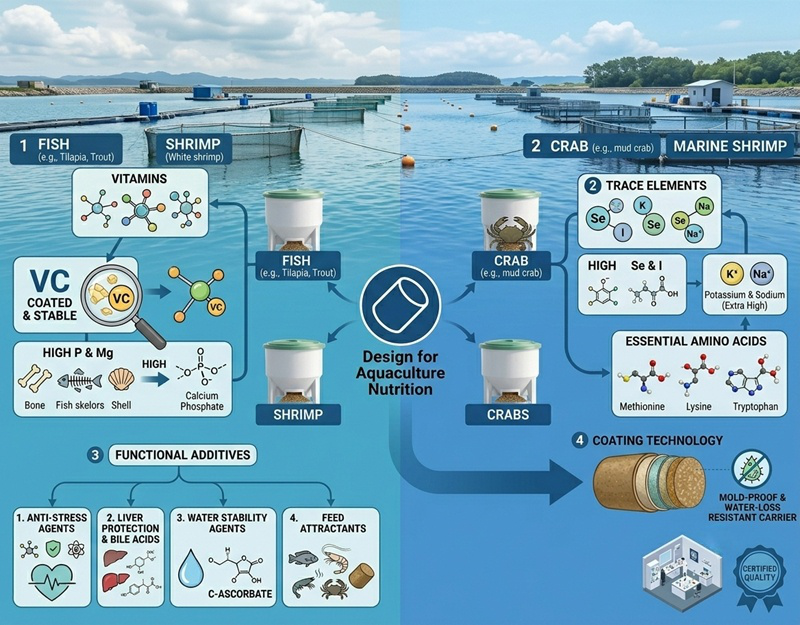
(4) Aquatic premixes (fish/shrimp/crab, freshwater + marine aquaculture)
Key considerations for aquatic premixes: high stability, high temperature resistance, antioxidant properties, and water-soluble properties.
Common aquatic premix ingredients include:
VC: Coated and stabilized VC (ordinary VC is easily oxidized and degraded in water); high phosphorus and high magnesium, suitable for aquatic skeletal development.
Trace elements: High selenium and iodine; additional potassium and sodium for marine shrimp; essential amino acids for fish and shrimp: methionine, lysine, and tryptophan.
Functional additives: Anti-stress additives, liver-protecting bile acids, aquatic ascorbic acid, and appetite stimulants; added anti-mold and water-soluble carriers. - Key considerations for specific aquatic product categories:
Carnivorous fish (bass/snakehead) premix: High in amino acids and methionine.
Omnivorous fish (grass carp/carp): Emphasis on vitamin and mineral balance.
Shrimp/crab premix: Fortified with calcium, phosphorus, and choline to promote shell hardening.
For specific formulations for different fish species, consult the Polifar team, which has decades of experience in the industry. We will provide the best and most reasonable recommendations based on your past usage habits and current environmental conditions.
(5) Pet premix (cats, dogs, companion animals)
Pet premixes are characterized by: high protein content, absence of growth promoters for livestock and poultry, and high content of palatability enhancers.
Common dog and cat breeds require additional nutrients in their diets:
Dogs: High choline, taurine, and calcium-phosphorus ratio (high calcium for puppies, low calcium for adult dogs); added meat-grade amino acids and probiotics.
Cats: Forced addition of high taurine (cats cannot synthesize it themselves; taurine deficiency can cause blindness); fortified with VA and arginine.
(6) Special Economic Animal Premixes (Rabbit, Fox, Mink, Quail, Pigeon)
Rabbit premix: Low copper, high crude fiber with minerals, added trace elements to prevent coccidiosis, and high calcium and phosphorus to prevent foot dermatitis.
Fur-bearing animals (Fox/Mink): High methionine, sulfur-containing amino acids (promoting fur growth), VA, and VE.
Pigeons/Quails: Egg-laying poultry formula, high in VB and manganese; quail premix calcium content is comparable to that of laying hens.
List of key differences among all types of premixed feeds
| Animal Categories | Digestive Types | Core Nutritional Differences | Signature Additives | Prohibited Ingredients |
| Pigs | Simple Stomach | High in lysine, high in copper and zinc | Acidifiers, Organic Iron | Rumen-exposed vitamins, urea |
| Poultry | Simple Stomach | High in calcium for egg-laying poultry, high in methionine for meat-producing poultry | Biotin, High Manganese | Rumen extract, slow-release urea |
| Cattle & Sheep (Ruminants) | Rumen | High in cobalt, rumen-protected nutrients | Baking Soda, Rumenin, Coated Vitamins | High copper and zinc (pig feed), high levels of free lysine |
| Aquatic Products | Aquatic Cold-blooded | Encapsulated vitamin C, high in phosphorus | Bile Acids, Water-resistant Carriers | Terrestrial growth-promoting high-copper formulas |
| Cats & Dogs (Pets) | Simple Stomach (Carnivorous) | Cat-specific taurine | Pet Appetite Enhancers | Animal antibiotic growth promoters |
4. Correctly Selecting and Storing High-Quality Premixes
Premix production places extremely high demands on R&D technology, production equipment, quality control systems, and raw material supply chains. Brand strength directly determines product quality stability. Customers should prioritize reputable brands with mature technology, a good track record, and complete qualifications. For example, DSM, Cargill, Nutreco, BASF, and Polifar all provide qualification certificates and enjoy a certain level of international recognition.
During different seasons and environments, timely adjustments to animal premix formulations are necessary to prevent animal diseases and reduce productivity. Premix additives must adhere to the principles of light protection, moisture prevention, ventilation, and low temperature. Active ingredients such as vitamins and probiotics in premixes are sensitive to light, moisture, and high temperatures. They must be stored in a dry, cool, well-ventilated, and light-protected warehouse, away from the ground and walls, to prevent mold growth. Strict adherence to shelf-life regulations is also crucial; prioritize products nearing their expiration date and use them as soon as possible after opening to avoid loss of active nutrients due to prolonged storage. The use of moldy, clumped, or expired premixes is strictly prohibited to avoid causing intestinal diseases and poisoning in livestock and poultry.
Conclusion
The correct selection and use of animal premixes is a core element in improving quality, reducing costs, and increasing efficiency in modern farming, directly impacting the economic benefits and sustainable development of the livestock industry. Farmers of different sizes need to choose the most suitable premixes based on their specific farming conditions. If you still have questions about choosing premixes after reading this article, you can contact industry experts at Polifar. We will do our best to design the most suitable solution for you and help you solve all your problems, whether it's products or other aspects, giving you a satisfactory answer!