
 English

Views: 0 Author: Site Editor Publish Time: 2026-01-14 Origin: Site


Definitions of Citric Acid and Fumaric Acid
(1) What is Citric Acid?
Citric acid, also known as citric acid, has the molecular formula C₆H₈O₇. It is an important organic acid, a colorless crystal, odorless, with a strong sour taste, easily soluble in water, and is a natural preservative and food additive.
Natural citric acid is widely distributed in nature, found in plants such as lemons, citrus fruits, pineapples, and in the bones, muscles, and blood of animals. Synthetically produced citric acid is
obtained by fermenting sugars such as sugar, molasses, starch, and grapes.
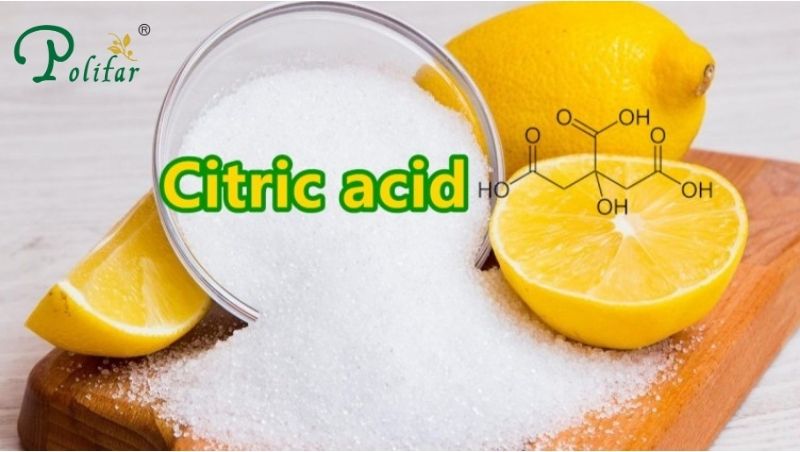
Many fruits and vegetables, especially citrus fruits, contain a relatively high amount of citric acid, particularly lemons and limes—they contain a large amount of citric acid, reaching up to 8% after drying (approximately 47g/L in juice).
(2) What is Fumaric Acid?
Fumaric acid, also known as fumaric acid, corydalic acid, or lichenic acid, is a colorless, flammable crystal, a carboxylic acid derived from butene. Fumaric acid has a fruity taste and can be found in the genera *Corydalis*, *Boletus*, lichens, and Icelandic seaweed. It is a white granular or crystalline powder, odorless, with a characteristic, strong sour taste, approximately 1.5 times that of citric acid. Its melting point is 286-287℃; it sublimes above 200℃, decomposes at 290℃, and above 230℃ first transforms into maleic acid, then loses water to form maleic anhydride.
Both citric acid and fumaric acid are acidity regulators and additives, widely used in the food, pharmaceutical, feed, and industrial sectors. Citric acid and fumaric acid have different raw materials and production processes. The following will discuss the differences between the two based on their applications.
What is an acidity regulator?
Acidity regulators are substances used to maintain or alter the pH of food, adjusting the pH during food processing to improve its sensory appearance, increase appetite, and have preservative and preservative effects, as well as promoting the digestion and absorption of calcium and phosphorus in the body.
Differences between Citric Acid and Fumaric Acid
1. Differences in Physical and Chemical Properties
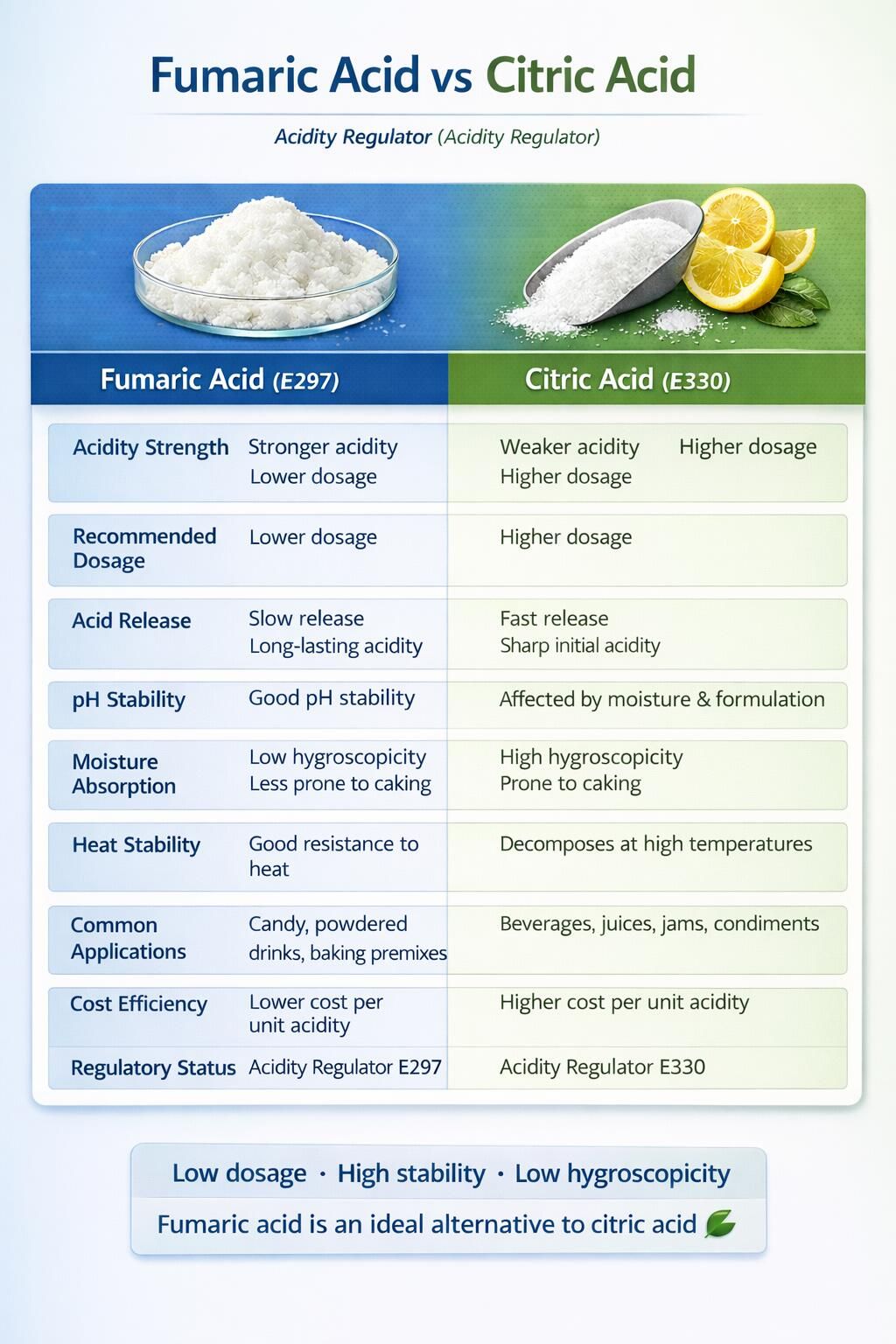
(1) Solubility Differences: Citric acid is highly soluble in cold water. In contrast, fumaric acid has very low solubility in cold water and is only readily soluble in hot water, which limits its application in some liquid beverages.
(2) Acid Strength and Flavor: Fumaric acid has a stronger sour taste than citric acid; its acidity is approximately 1.5 times that of citric acid by weight. Citric acid: Provides a fresh, bright, and quickly dissipating sour taste with a citrus flavor. Fumaric acid: Has a more persistent and stable sour taste with a unique fruity flavor.
2. Application Differences
(1) Food Industry
Citral acid is mainly used in food additives for carbonated beverages, fruit juices, lactic acid drinks, and other refreshing beverages, as well as pickled products. Citric acid accounts for approximately two-thirds of the total consumption of acidulants. Adding citric acid to canned fruit can maintain or improve the flavor of the fruit, increase the acidity of some low-acid fruits during canning (lowering the pH value), weaken the heat resistance of microorganisms and inhibit their growth, preventing bacterial swelling and spoilage that often occurs in canned fruits with low acidity.
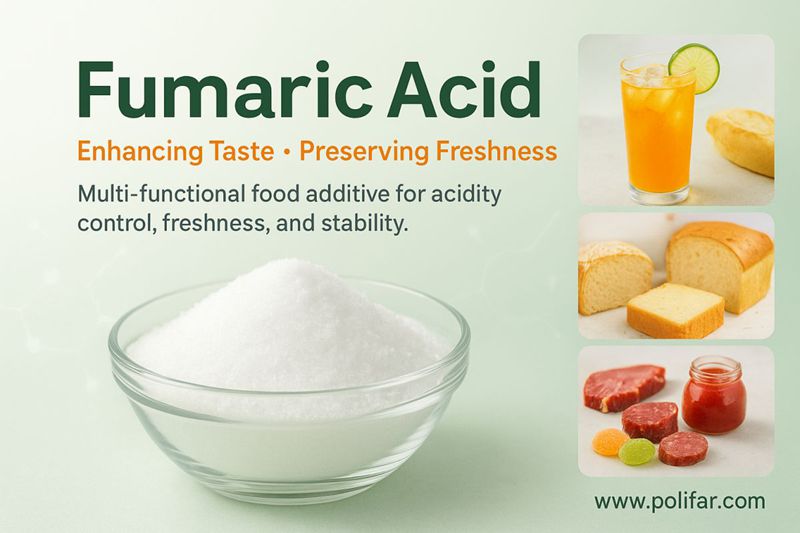
Fumaric acid is mainly used in the food industry for beverages, baked goods, confectionery, processed foods, dry powders and powders, dairy products, and cured meats. Adding fumaric acid to fruit juices, soft drinks, and powdered beverages can enhance the sour taste and regulate acidity. It also provides a refreshing sour taste while balancing the pH value of these beverages. In the baking industry, fumaric acid helps improve dough strength and maintain freshness, and is commonly used in bread, cakes, and muffins to ensure consistent taste and prevent spoilage. Fumaric acid imparts a rich sour taste to sour candies, gummies, and jellies, while also improving the texture and consistency of these products, helping them maintain their shape and quality for longer periods. For specific applications, see the article "Multifunctional Role of Fumaric Acid in Food Additives" on the polifar website.
(2) Animal husbandry
Citrate can increase animal feed intake, promoting digestion and nutrient uptake.
Adding citric acid to food can improve its palatability. Animal additive citric acid can directly stimulate taste buds in the mouth, increasing saliva secretion, acting as a flavoring agent, increasing animal appetite, and thus increasing feed intake. It directly stimulates the secretion of digestive enzymes, delays gastric emptying, and promotes nutrient digestion.
Citrate can promote the health of animal gut microbiota.
Citrate can effectively inhibit bacterial growth, providing favorable growth conditions for beneficial bacteria such as lactobacilli in the gut, thereby maintaining the normal balance of the microbial flora in the digestive tract of livestock and poultry.
Ferrous fumarate is a reddish-brown solid powder. Ferrous fumarate can prevent iron-deficiency anemia in various animals, reduce diarrhea, improve livestock and poultry survival rates, reduce dystocia, stillbirths, and abortions, enhance animal immunity and disease resistance, promote animal growth and development, resulting in stronger physiques, rosy and glossy fur, increased daily weight gain and egg production, reduced broken and soft-shelled eggs, and improved animal product quality.
Fumaric acid can also be used as a veterinary drug additive. In veterinary drug production, fumaric acid can be used as an acidic additive to improve the stability and solubility of veterinary drugs, thereby enhancing their efficacy.
(3) Pharmaceutical Industry
Citrate can effectively promote calcium absorption, has anticoagulant properties, treats hypokalemia, prevents and controls kidney stones, improves drug efficacy, and acts as a buffer and stabilizer, as well as having antibacterial and anti-inflammatory effects.
Citrate is used in cosmetics: mainly as a fruit acid to accelerate keratin renewal, and in whitening and anti-aging products.
Fumaric acid plays an important role in the pharmaceutical industry. Wikipedia states that psoriasis is caused by a deficiency in the production of fumaric acid in the skin, so fumarate esters are sometimes used to treat this condition. However, side effects of fumaric acid use include kidney or digestive system diseases, and skin redness, which are caused by overuse. Long-term use can lead to a decrease in white blood cells.
(4) Industrial Uses
Citrate's Metal Cleaning Function
Citrate, as a detergent, exhibits outstanding corrosion inhibition properties. Pickling is a crucial step in chemical cleaning. Compared to inorganic acids, citric acid is relatively weak, resulting in less corrosion to equipment. Citric acid cleaning is safe and reliable, and waste liquid is easy to treat and does not harm the human body.
Fumaric acid is used as a pickling agent and fixative in the leather and textile industries, as a catalyst in the rubber industry, and can also be used as a cleaning agent, descaling agent, and intermediate, showing promising applications.
This article provides a simple discussion of the differences between citric acid and fumaric acid. For professional advice, please feel free to contact us.
The Polifar team is committed to providing the highest quality citric acid, fumaric acid, and other safe and healthy food and feed additives, ensuring all our customers have access to safe, efficient, and innovative food production solutions.


