 English

Views: 0 Author: Site Editor Publish Time: 2026-03-19 Origin: Site


Zinc sulfate monohydrate is the most widely used inorganic zinc source in the field of feed additives. As an essential trace element for animals, zinc participates in the composition and activation of over 300 enzymes in the body, playing an irreplaceable role in animal growth, immunity, reproduction, and skin health. It is an indispensable nutrient for maintaining life activities. Meanwhile, zinc sulfate monohydrate demonstrates clear application value in various livestock, poultry, and aquatic products. This article from Polifar Group focuses on the role and function of zinc sulfate monohydrate in feed additives, systematically summarizing its core physiological functions, specific application value, disease prevention and control effects, and combined applications.
Basic Information on Zinc Sulfate Monohydrate as a Feed Additive
Molecular Formula: ZnSO₄·H₂O, Zinc Content: Approximately 35.5% (dry basis ≥35%).
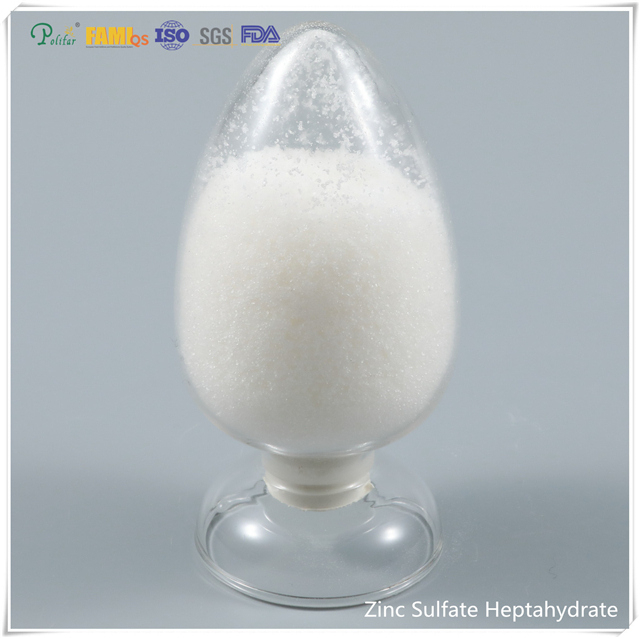
Appearance: White crystals/powder/granules, good flowability, easily soluble in water, slightly soluble in alcohol, aqueous solution is weakly acidic.
Stability: Stable at room temperature, loses water of crystallization at 100℃ to become anhydrous; does not easily clump, easy to process and store.
Standard: Complies with Chinese national standard GB/T 23354-2009, with strict control over heavy metals (Pb≤0.002%, As≤0.0005%, Cd≤0.001%).
If you are interested in this product, you can check the Polifar product details page for zinc sulfate monohydrate.
Zinc is a component or activator of many enzymes in animals. Specifically, zinc is a molecular component of carbonic anhydrase, pancreatic carboxypeptidase, glutamate dehydrogenase, and
lactate dehydrogenase, and can activate uricase, dipeptidase in intestinal fluid, and other enzymes. These enzymes participate in the metabolism of carbohydrates, lipids, proteins, and nucleic acids, and are crucial for maintaining normal physiological functions in animals.
Plasma, liver, pancreas, and bone tissue are sites of rapid zinc exchange and storage, and are highly sensitive to changes in dietary zinc levels. This means that when dietary zinc supply is insufficient, these tissues will be the first to show symptoms of zinc deficiency.
2. The Core Role of Zinc Sulfate Monohydrate in Feed Additives
Zinc has a significant impact on animal growth, development, and reproductive function. Specifically:
Skeletal Development: Affects bone formation and calcification
Protein Synthesis: Participates in nucleic acid and protein metabolism, promoting muscle tissue growth
Growth Hormone Regulation: Indirectly affects reproductive function through its effects on the pituitary gland and gonadotropins
Zinc deficiency leads to impaired growth and development in livestock and poultry, reduced feed utilization, and seriously affects breeding efficiency.
Zinc is a key trace element for maintaining animal immune function. Studies have shown that:
Zinc deficiency leads to weakened immune function in livestock and poultry, increasing susceptibility to disease
Zinc participates in the development of immune organs and the maintenance of immune cell function
Appropriate zinc supplementation can improve antibody levels and disease resistance
Zinc is closely related to skin health and wound healing. Its functions include: Participating in keratin synthesis and maintaining the normal structure of skin and hair Promoting wound healing and helping granulation tissue formation Zinc deficiency can easily cause parakeratosis, maldevelopment and deterioration of hair
Zinc indirectly affects reproductive function through its effects on the pituitary gland and gonadotropins. Zinc deficiency can lead to: Decreased semen quality in male animals Abnormal estrus and reduced conception rate in female animals Embryonic development is hindered.

3. Specific pharmacological effects of zinc sulfate
Zinc sulfate itself has astringent, antiseptic, bactericidal and analgesic effects. Zinc ions can precipitate proteins and have astringent and antiseptic effects when used externally. Specific applications include: Prevention and treatment of foot rot: used in ruminants for the prevention and treatment of foot rot Treatment of ulcerative colitis: can be used internally to treat ulcerative colitis Prevention and treatment of piglet diarrhea: has bactericidal and bacteriostatic functions and can effectively prevent diarrhea in young animals
In aquaculture, zinc sulfate monohydrate has the effect of killing ciliates. The mechanism is as follows: zinc ions bind to the proteins in the insect cells to form protein salts, causing them to precipitate; simultaneously, zinc ions bind to the sulfhydryl groups of enzymes in the insect cells, rendering the enzymes inactive, thus achieving the purpose of killing them. It is mainly used to prevent and control sessile ciliate diseases in aquatic animals such as crabs and shrimp.
In addition, zinc sulfate can effectively regulate the osmotic pressure inside and outside shrimp and crab cells in water, inhibiting the stress response of shrimp and crabs when the salinity of the water suddenly drops. It also has an astringent effect on the skin, making the shrimp and crabs' bodies clearer.
4. Effects of Zinc Sulfate Monohydrate on Different Animals
Piglets: 100–150 mg/kg, promotes growth, prevents diarrhea, reduces runts, and increases weaning weight.
Fattening Pigs: 50–80 mg/kg, improves daily weight gain, lean meat percentage, and feed efficiency.
Sows: 80–100 mg/kg, increases litter size and live piglet rate, and reduces abortion and weak piglets.

Laying Hens: 70–104 mg/kg, improves egg production rate, eggshell quality, hatchability, and extends the laying cycle.
Broilers: 60–90 mg/kg, accelerates growth, improves uniformity, and reduces mortality.
Breeding Poultry: 80–120 mg/kg, optimizes reproductive performance and improves the quality of hatching eggs. (3) Ruminants (Cattle/Sheep)
Supplementing zinc deficiency in pasture/diet, preventing skin keratinization, reproductive disorders, and slow growth.
Increasing milk yield and quality in dairy cows, and improving daily weight gain and feed conversion in beef cattle.
Promoting growth, increasing survival rate, and enhancing stress resistance and disease resistance.
Improving molting and growth in shrimp and crabs, and enhancing the quality of aquatic products.
Improving fur: Maintaining normal skin and hair follicle metabolism, preventing incomplete keratinization, dermatitis, hair loss, and rough coat.
Enhancing immunity, reducing skin diseases, improving coat luster and neatness, resulting in a better appearance for pets or specialty animals, and increasing the economic benefits of pets.
5. Advantages Compared to Other Zinc Sources
Core Advantages of Zinc Sulfate Monohydrate
Core Advantages: High zinc content, good water solubility, high bioavailability, low cost, excellent stability, low dosage, and environmentally friendly, making it the top choice for cost-effectiveness.
The following diagram clearly shows the advantages and disadvantages of various types of zinc:
| Comparison Items: | Zinc sulfate monohydrate | Zinc sulfate heptahydrate | Zinc oxide | Organic zinc (e.g., zinc methionine) |
| Zinc Content | 35.50% | 22.30% | 80.30% | 15–25% |
| Bioavailability | High (≈90%) | Medium | Low (≈60%) | Very high |
| Water Solubility | Good | Good | Poor | Medium |
| Stability | Good (not easily deliquescent) | Hygroscopic | Good | Medium |
| Cost | Low | Medium | Medium | High |
| Feed Palatability | Good | Medium | Average | Good |
| Dosage | Low | Medium | High (approximately 9 times that of zinc sulfate) | Low |
| Environmental Impact | Good (Less zinc waste) | Medium | Poor (easily leaves residue) | Good |
6. Synergistic Effects of Zinc Sulfate Monohydrate with Other Nutrients
Modern farming often employs a combination of organic and inorganic zinc. Studies have found that combining zinc methionine with zinc sulfate monohydrate at different levels can optimize micronutrient metabolism and zinc-related gene expression in weaned piglets, meeting their growth needs even under low-level supplementation conditions. This provides a scientific basis for determining the optimal combination model for organic and inorganic zinc.
Zinc exhibits synergistic or antagonistic effects with other micronutrients. Polifar Group reminds users to pay attention to the following in practical applications:
Copper and Zinc: Antagonistic effects exist; high-copper diets require appropriate increases in zinc supplementation.
Iron and Zinc: In certain processed products, zinc sulfate monohydrate may contain a small amount of ferrous sulfate, simultaneously supplementing iron.
Phytase: Can degrade phytic acid, improving zinc utilization; when using phytase, the amount of zinc supplementation can be appropriately reduced.
Vitamin A: Promotes vision and immunity.
Vitamin E:Enhances antioxidant capacity.
Conclusion
In summary, the important roles of zinc sulfate monohydrate can be found in the table below:
| Functional Category | Specific Functions | Mechanism of Action |
| Enzyme System | Participates in the composition of over 300 enzymes | As an essential component and activator of enzymes |
| Growth and Development | Promotes bone and muscle development | Participating in nucleic acid and protein metabolism |
| Immune Function | Enhances immunity | Participating in the development of immune organs and cellular function |
| Skin Health | Maintains skin and coat | Participating in keratin synthesis and promoting wound healing |
| Reproductive Function | Improves reproductive performance | Through its effects on the pituitary gland and gonadotropins |
| Bactericidal and Astringent | Prevents foot rot and diarrhea | Zinc ions precipitate proteins and bind to enzyme sulfhydryl groups |
| Aquatic Applications | Kills ciliates | Binding to parasite proteins, thus inactivating the enzyme |
Zinc sulfate monohydrate, as a feed additive, plays a crucial role, as fully illustrated in the diagram above. Its excellent water solubility, high bioavailability, and easy absorption make it one of the most important zinc supplements in the feed industry.
In practical applications, the zinc sulfate monohydrate provided by Polifar Group boasts stable content and quality, and is certified by FAMI-QS, ISO, and HACCP. Polifar recommends precisely determining the dosage based on factors such as animal breed, growth stage, and feed composition. This aims to prevent zinc deficiency-induced performance decline while avoiding waste and environmental pollution caused by excessive addition. Furthermore, the combined application of organic and inorganic zinc provides a new technological pathway for achieving precise zinc supplementation and optimizing livestock farming efficiency.